The Airbnb Hidden Fee Extortion has reached a critical boiling point during the 2026 Spring Break season. What began as a revolutionary “Sharing Economy” model-offering authentic local experiences and affordable alternatives to hotels—has factually transitioned into a corporate rent-seeking machine. This guide analyzes the structural shift from individual hosting to Wall Street-backed “Mega-hosts,” the psychological manipulation of “Drip Pricing,” and the predatory “Chore List” culture that characterizes the platform today.
1. The Sharing Revolution: The Original Value Proposition
From a factual perspective, the early years of the platform represented a genuine innovation in travel. By allowing homeowners to monetize vacant rooms, it broke the hotel industry monopoly and provided middle-class travelers with unique, budget-friendly accommodations. This “Sharing Revolution” democratized global travel and funneled tourism revenue directly into local residential economies rather than multinational hotel chains. In its original form, the platform promoted a “live like a local” sentiment that was both economically and culturally beneficial.
2. The Gentrification Machine: The Rise of Wall Street Mega-Hosts
By 2026, the profile of an “average host” has factually changed. Data indicates that a significant percentage of active listings are now controlled by corporate “Mega-hosts” who manage dozens or even hundreds of properties. These entities often utilize Wall Street capital to purchase affordable residential housing in bulk, converting them into permanent short-term rentals. This creates a “Gentrification Machine” that inflates local home prices and displaces long-term residents, effectively turning quiet neighborhoods into unregulated, “ghost hotel” districts.
3. The Mechanics of Airbnb Hidden Fee Extortion
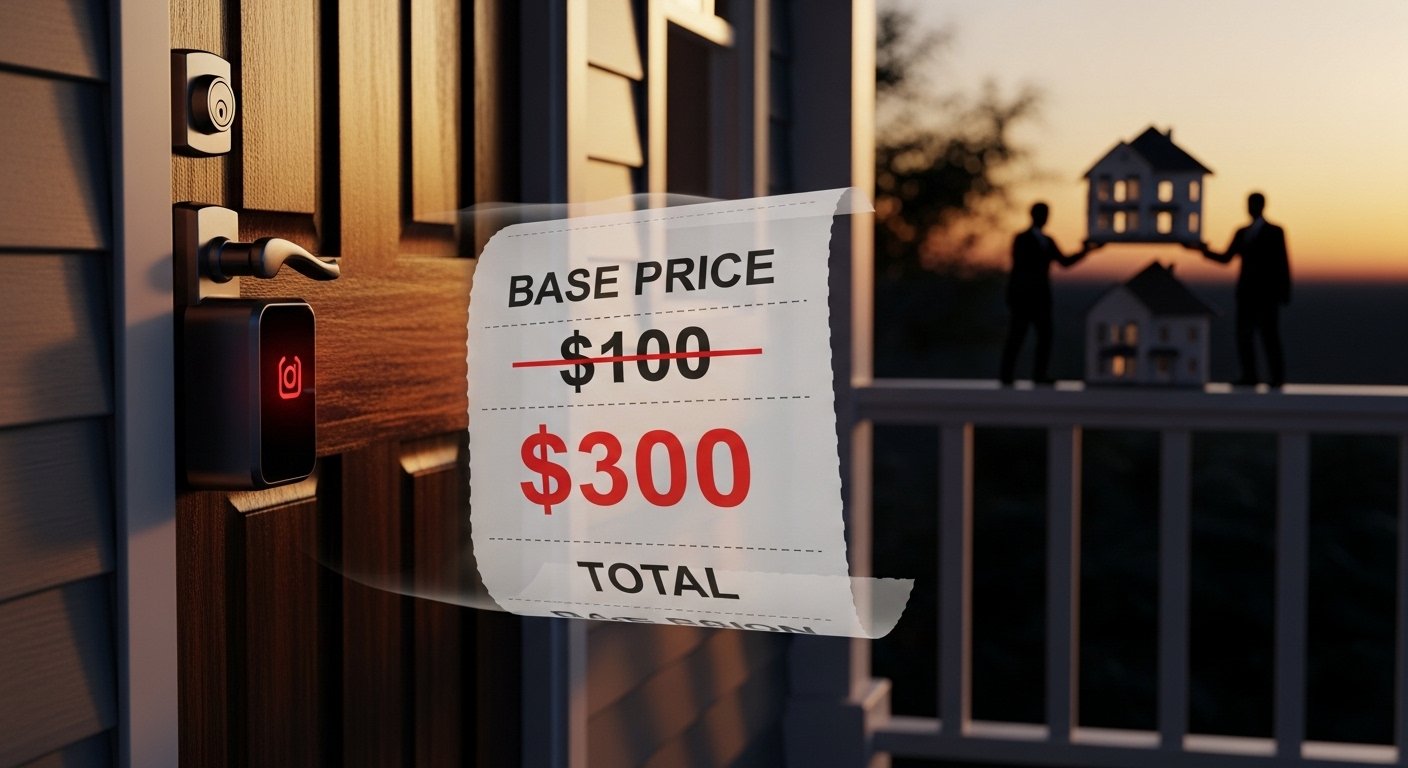
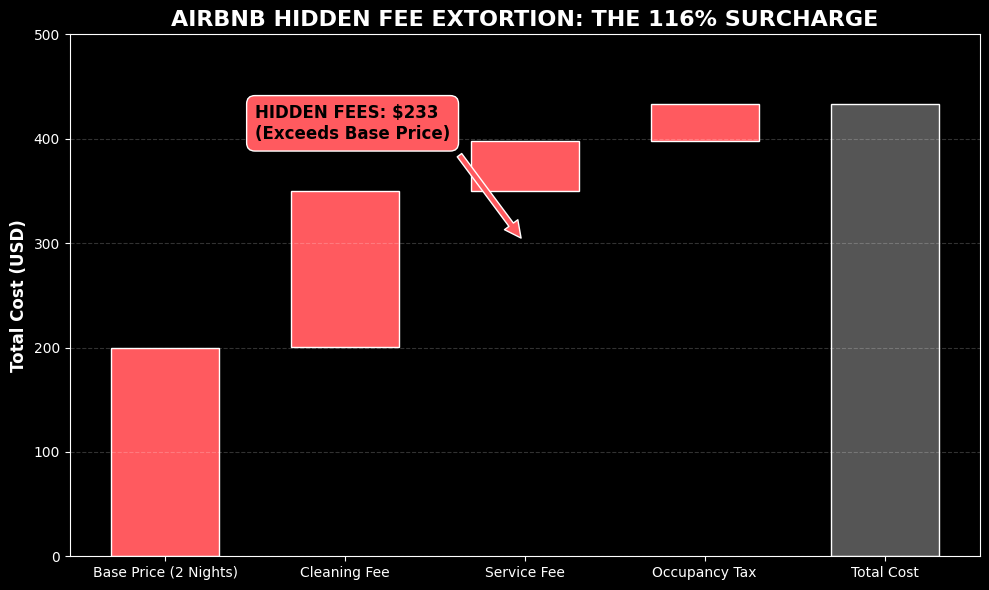
The most significant consumer complaint in 2026 is the Airbnb Hidden Fee Extortion. Platforms utilize a dark pattern known as “Drip Pricing,” where the initial search result displays a low base rate, but the final total is revealed only at the point of checkout. This total often includes inflated “Cleaning Fees,” “Service Fees,” and “Management Fees” that can factually exceed the cost of the room itself.
📊 2026 Factual Price Comparison: Airbnb vs. Hotel
| Cost Component | Traditional Hotel | Airbnb (Mega-Host) |
|---|---|---|
| Base Nightly Rate | $180 (Transparent) | $120 (Misleading) |
| Cleaning Fee | $0 (Included) | $150 – $250 (Separate) |
| Required Labor | None | “Chore List” (Trash, Laundry, Dishes) |
The Chore List Paradox
Despite paying a $150+ cleaning fee, many 2026 guests are subjected to a mandatory “Chore List” upon checkout. This includes washing dishes, stripping bed linens, and taking out the trash. This creates a factual power imbalance where the consumer is forced to pay for a professional service while simultaneously performing the labor for that service. This “Double Extraction” model has led to numerous consumer protection investigations regarding Airbnb Hidden Fee Extortion.
Step-by-Step Guide to Auditing Your Travel Budget
Managing your discretionary spending is a vital financial milestone for retirees and families in 2026. Follow these steps to verify the true cost of your stay:
- Perform a “Total Price” Search: Utilize the platform’s toggle to show the “Total Price including fees” immediately. This factually reveals the impact of Airbnb Hidden Fee Extortion before you commit time to a specific listing.
- Review the House Rules for Chores: Before booking, scroll to the bottom of the listing to find the “Chore List.” If the host requires laundry and dishwashing despite a high cleaning fee, the financial utility of the stay is compromised.
- Compare with Local Hotels: In 2026, hotels have responded to competition by offering more transparent pricing and loyalty benefits. Factually compare the total Airbnb price with a hotel that includes professional cleaning and amenities.
- Calculate the “Service-to-Cost” Ratio: Determine if the lack of a front desk, security, and concierge is worth the 40% fee surcharge often found on the platform.
Frequently Asked Questions about Airbnb Fees
Is the “Cleaning Fee” legally regulated in 2026?
While the FTC has introduced new “Junk Fee” rules in 2026 to increase transparency, hosts still retain the right to set their own cleaning prices. The Airbnb Hidden Fee Extortion often bypasses these regulations by labeling the fee as a “reimbursement” for professional cleaners, even if the host performs the cleaning themselves.
Why are “Mega-hosts” allowed to buy up residential neighborhoods?
This is a factual failure of local zoning laws. Many cities in 2026 are struggling to pass “Short-Term Rental” (STR) ordinances that limit the number of properties one person or corporation can own. Until these laws are tightened, residential housing remains a high-yield asset class for institutional investors.
Verification Checklist Before Your Next Booking
Before you finalize your 2026 Spring Break travel, personally verify the following factual items to protect your assets:
- [ ] Final Total Audit: Does the final checkout price match your initial budget expectations?
- [ ] Cleaning vs. Labor: If the cleaning fee is >$100, is there a mandatory chore list? (If yes, reconsider).
- [ ] Host Identity: Is the host a “verified individual” or a management company (e.g., “Sonder,” “Casai”)? Management companies often have higher service fees.
- [ ] Cancellation Policy: Review the “Strict” vs. “Flexible” policy; many **Airbnb Hidden Fee Extortion** cases occur when a user tries to refund a high-fee booking.
Next Steps for Your Personal Financial Sovereignty
Securing your financial future means recognizing when “Convenience” has been weaponized into “Extortion.” Once you have audited the true costs of the Airbnb Hidden Fee Extortion, you should have a clearer understanding of your 2026 travel budget. It is highly recommended to support local boutique hotels or verified individual hosts who do not utilize predatory “Drip Pricing” models. For more factual information on junk fee prevention, visit the official FTC.gov or ConsumerFinance.gov websites.