The Free Stock Trading App Risks associated with platforms like Robinhood have become a primary concern for financial stability in 2026. While the “Democratization of Finance” initially lowered barriers by eliminating commissions and introducing fractional shares, it factually paved the way for a more predatory environment. This guide analyzes the behavioral economics of gamification, the mechanics of Payment for Order Flow (PFOF), and why the average retail investor is no longer a client, but a data product for Wall Street’s largest market makers.
Democratization of Finance: The Era of 1-Dollar Accessibility
From a factual standpoint, the rise of zero-commission trading was a significant milestone in expanding market participation. By removing $7-$10 trade fees and allowing “fractional shares,” these apps enabled younger generations to become shareholders of companies like Apple or Tesla with as little as $1. In 2026, this high level of accessibility is often cited as the catalyst for the largest influx of retail capital into the U.S. stock market in history. This democratization provided a legitimate pathway for wealth building that was previously reserved for high-net-worth individuals.
Structural Free Stock Trading App Risks: The Gamification Trap
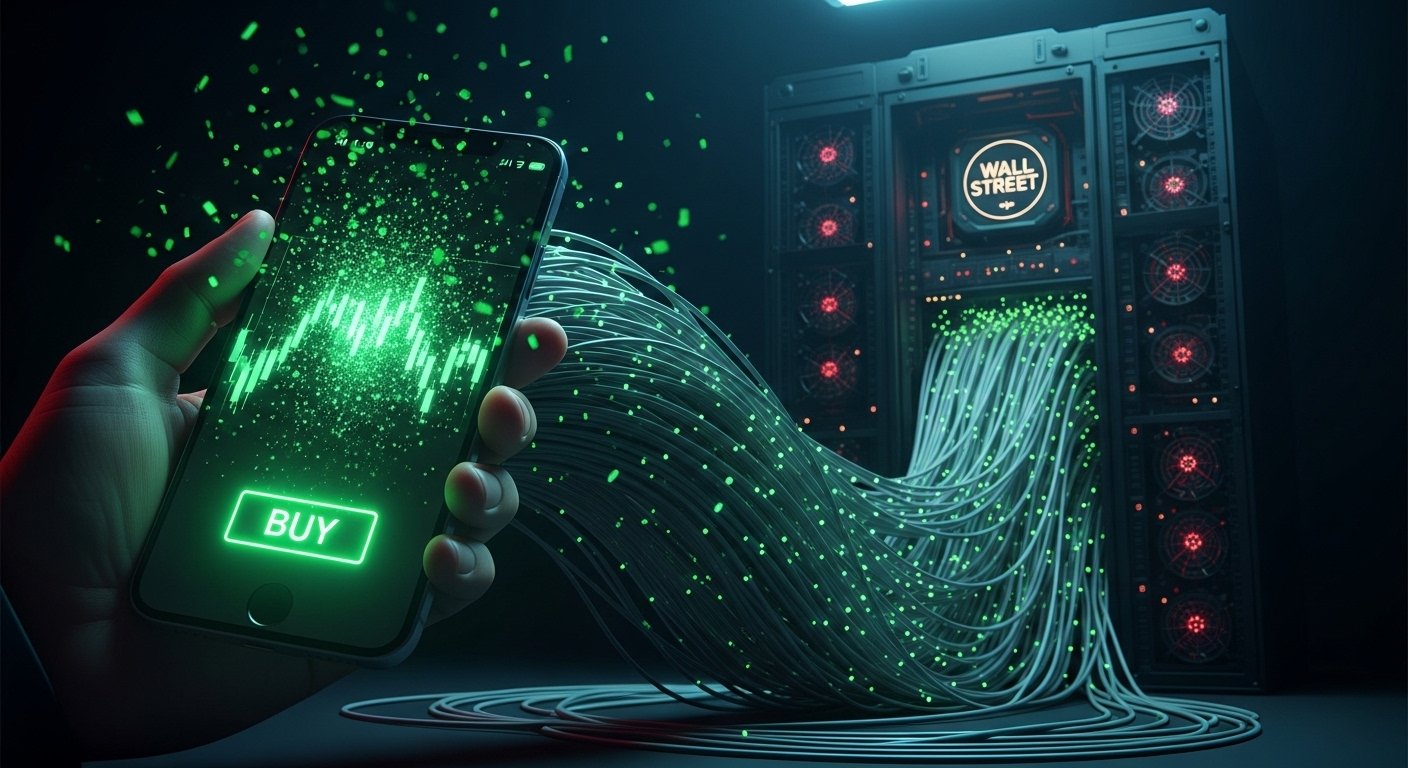
Despite the accessibility, the Free Stock Trading App Risks are deeply embedded in the UI/UX design. Utilizing behavioral psychology, these apps employ “Gamification” techniques to trigger constant dopamine releases. Features such as digital confetti upon trade execution, vibrant neon color schemes, and push notifications are factually designed to encourage “Over-trading.”
The 0-DTE Options Crisis
In 2026, the promotion of high-risk financial instruments on retail home screens has escalated. Specifically, 0-DTE (Zero Days to Expiration) options are marketed as low-cost entry points into the market. However, these are factually high-leverage gambling tools where the probability of total capital loss exceeds 95% for the average user. By placing these options at the center of the user experience, platforms maximize their revenue at the expense of user solvency.
Payment For Order Flow (PFOF): The Invisible Data Tax
A critical component of Free Stock Trading App Risks is the revenue model known as Payment for Order Flow (PFOF). Since the apps do not charge commissions, they generate billions by selling your “Order Flow” data to massive market makers like Citadel Securities or Susquehanna.
📊 Factual Analysis of the PFOF Revenue Loop
| Step | The Action | The Economic Reality |
|---|---|---|
| User Click | Investor hits “Buy” for 10 shares of SPY. | The platform receives $0 in commission from the user but triggers a data transmission. |
| Data Sale | The platform sells this order data to a Market Maker. | The Market Maker pays the app for the privilege of seeing your trade before it hits the open exchange. |
| Execution Gap | The Market Maker executes the trade 0.001 seconds ahead. | By “front-running” or capturing the bid-ask spread, the Market Maker extracts a fraction of a cent per share—amounting to billions in aggregate profit. |
Step-by-Step Guide to Auditing Your Trading Behavior
Managing your digital assets for retirement requires a factual assessment of your trading habits. Follow these steps to mitigate Free Stock Trading App Risks:
- Review Your Turnover Ratio: Calculate how many times you have bought and sold the same position within 30 days. A high ratio is a factual indicator of “Dopamine Trading” rather than “Investing.”
- Analyze Execution Quality: Compare the price you received on your “free” app with the current market price on an institutional terminal. The difference is the hidden PFOF tax you paid.
- Disable Impulse Notifications: Go to settings and turn off “Price Movement Alerts” and “Trending Stocks” notifications. Reducing the digital noise is a factual defense against over-trading.
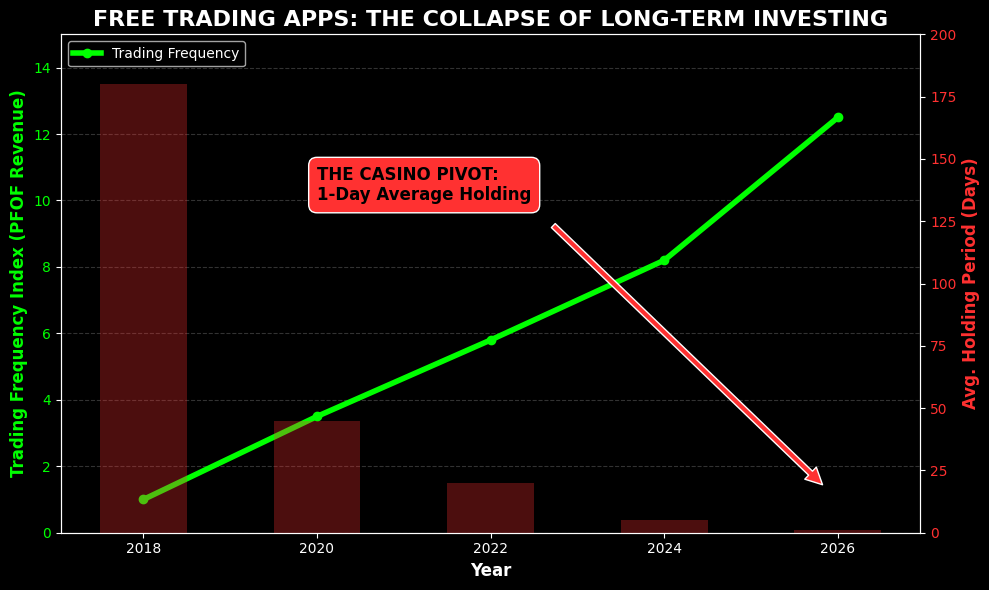
- Verify Option Approval Tiers: Check if your account is “Level 3” or higher. If you have been approved for complex options without a financial background, you are being set up for the “Casino Pivot.”
Frequently Asked Questions About Free Trading Risks
If there are no fees, how does the app stay in business?
As noted, the primary revenue is PFOF. In 2026, many apps also generate revenue by lending out your shares to short-sellers and by collecting interest on your uninvested cash. You are factually the “inventory” of the platform.
Is PFOF legal in the United States in 2026?
While banned in markets like the UK and restricted in parts of Europe, PFOF remains legal and foundational to the U.S. retail trading market. However, the SEC has introduced stricter “Best Execution” reporting requirements to help users visualize the Free Stock Trading App Risks.
Verification Checklist for Your Retirement Portfolio
Before executing another trade, personally verify these factual items to ensure you are not merely a data point for a Market Maker:
- [ ] Long-term Thesis: Do you have a written 5-year goal for this specific stock?
- [ ] Fee Comparison: Have you considered a traditional brokerage that charges a flat fee but offers superior execution speed?
- [ ] Cash Sweep Interest: Is your uninvested cash earning the current 2026 market interest rate, or is the app keeping the spread?
- [ ] UI De-Gamification: Have you customized your app to remove “Confetti” and “Neon” alerts?
The House Always Wins: Protecting Your Financial Future
Securing your financial sovereignty in 2026 means recognizing that “Free” is never actually free. The Free Stock Trading App Risks reveal that your attention and your data are the most valuable assets being traded. While the democratization of finance opened the door, the gamification and PFOF mechanics have turned it into a digital extraction pump. It is highly recommended to shift your focus back to stable, long-term retirement strategies and avoid the dopamine-driven volatility of zero-fee platforms. For more information on investor protection, visit the official SEC.gov or FINRA.org websites.