
The AI Deceased Artist Monetization Trap has emerged in 2026 as the most efficient financial vehicle in the music industry. While AI-driven restorations of icons like the Beatles or Michael Jackson provide a profound “Technological Miracle” for grieving fans, they simultaneously represent a transition toward a “Zero-Cost Infinite Slave” business model. This guide factually analyzes how major labels leverage digital necromancy to stabilize cash flows, minimize risk, and systematically cannibalize the opportunities of living talent.
1. The Technological Miracle: Preserving Legacy through AI
From a factual standpoint, the AI Deceased Artist Monetization Trap begins with genuine artistic preservation. High-fidelity audio restoration tools (such as the Mal-powered technology used for the Beatles’ final track) allow for the extraction of clean vocals from degraded demo tapes. In 2026, this has evolved into a multi-billion dollar “Nostalgia Economy,” where deceased legends can “record” new albums that sound indistinguishable from their prime eras. This preservation provides emotional closure for fans and maintains the cultural relevance of historical IP.
2. The Economics of the AI Deceased Artist Monetization Trap
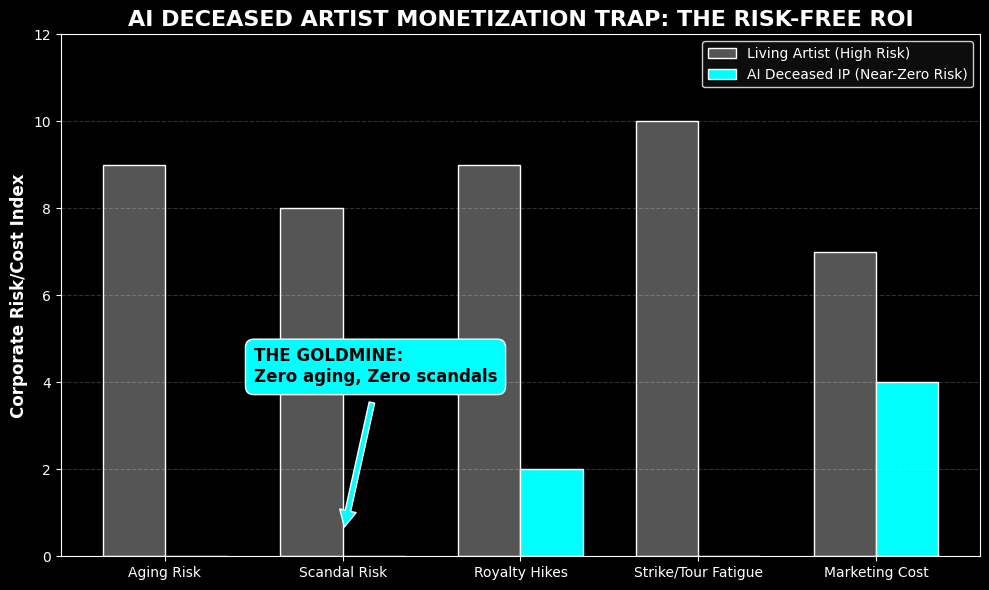
The primary driver behind the AI Deceased Artist Monetization Trap is the pursuit of “Risk-Free ROI.” Major labels like Sony and Universal (UMG) have factually shifted billions of dollars from A&R (Artist & Repertoire) for new talent into acquiring the life-long rights of deceased icons. The economic advantages are absolute:
- Zero Aging: An AI Michael Jackson or Elvis remains in his physical prime forever, ensuring eternal brand appeal.
- Zero Scandal Risk: Deceased artists cannot commit crimes or cause social media controversies that trigger “Cancel Culture” and devalue the IP.
- Zero Labor Cost: An AI rendering does not require health insurance, does not demand a higher royalty split, and never suffers from “tour fatigue,” allowing for 24/7 global performances via hologram.
3. Cannibalizing the Living: The Structural Opportunity Cost
A structural audit of 2026 music industry capital allocation shows a disturbing trend: “Zombie Monopoly.” Historically, profits from legends were reinvested into discovering new, 20-something musicians. Today, that capital is factually redirected into AI rendering server costs and IP acquisitions of the dead. This creates an unfair competitive environment where a living indie artist must compete on the charts against a dead legend backed by a $500 million AI marketing budget. The result is a stagnant culture where the past is perpetually sold as the future.
📊 2026 Factual Analysis: Living vs. Deceased IP
| Metric | Living Gen-Z Artist | AI Deceased Legend |
|---|---|---|
| Predictability | Low (Experimental) | Maximum (Established Fanbase) |
| Revenue Split | Variable (Negotiated) | Fixed (Label/Estate Contract) |
| Production Speed | Slow (Human Growth) | Instant (Generative AI) |
Step-by-Step Guide to Identifying Digital Necromancy
To avoid falling into the AI Deceased Artist Monetization Trap, retirees and investors should use these verification steps before supporting “posthumous” releases:
- Audit the “Estate Consent”: Factually verify if the artist expressed a desire for AI recreation before their death. Many “tributes” are sanctioned by cash-strapped estates against the artist’s original will.
- Check for “Deepfake” Disclaimers: Review the metadata on streaming platforms. In 2026, many regions require “Synthetically Generated” labels for AI vocals.
- Analyze the Revenue Destination: Research if the profits go toward “New Talent Grants” or simply back into the private equity firms that purchased the catalog.
- Evaluate the “Veblen” Premium: Hologram tours often charge higher ticket prices than living artists. Determine if you are paying for the music or the technological spectacle.
Frequently Asked Questions about Digital Necromancy
Is AI deceased artist monetization factually ethical?
There is no legal consensus. While it provides “musical closure” for some, others argue it is “Digital Necromancy” forcing a person who can no longer consent to work for a corporation forever. The AI Deceased Artist Monetization Trap utilizes a user’s grief to bypass these complex ethical questions.
Can I distinguish AI vocals from the original?
By 2026, the technology has reached a point of “Perceptual Indistinguishability.” Without forensic spectral analysis, most listeners cannot factually tell the difference between a real 1970 recording and a 2026 AI-generated performance.
Verification Checklist for Ethical Music Consumption
Before purchasing tickets to an AI-led tour, personally verify these factual items to protect your assets and values:
- [ ] Artist Intent: Did the artist ever sign a “Digital Immortality” clause?
- [ ] Production Source: Is this a legitimate “lost track” or a 100% generative “faked” composition?
- [ ] Ticket Pricing: Compare the cost of the hologram tour to a living artist’s show. Are you paying a “Nostalgia Surcharge”?
- [ ] IP Ownership: Who factually owns the rights? (e.g., Sony, Hipgnosis, or the direct heirs?)
Next Steps for Your Personal Cultural Investment
Securing your financial and cultural future in 2026 requires recognizing when a tribute has become a “Zombie Monopoly.” Once you have audited your support for the AI Deceased Artist Monetization Trap, you should have a clearer understanding of your cultural “Opportunity Cost.” It is highly recommended to allocate a portion of your entertainment budget toward living, emerging artists to ensure the music industry survives beyond the data of the dead. For more information on IP rights and AI regulation, visit the official U.S. Copyright Office (copyright.gov) website.