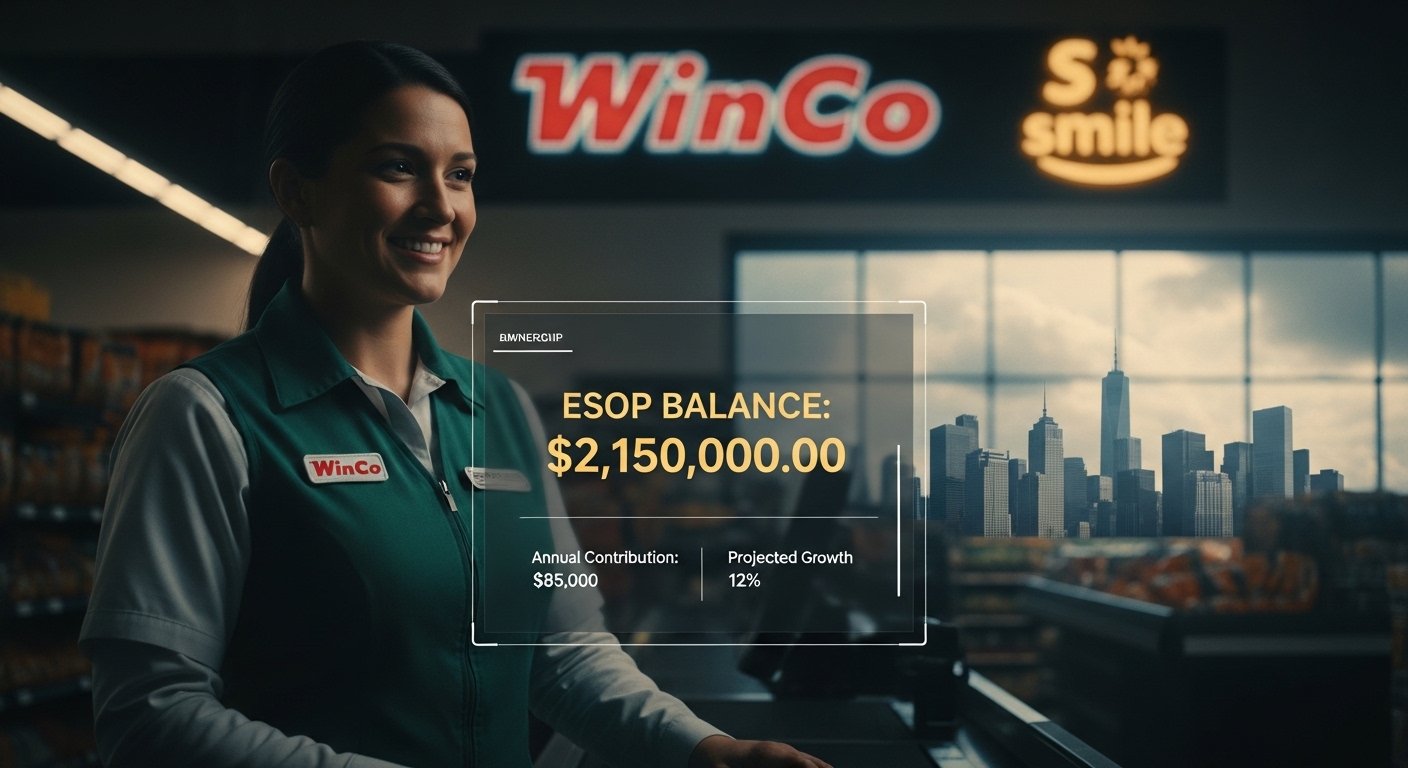
The phenomenon of WinCo Foods ESOP Millionaires has become a primary case study for wealth equality in 2026. As global retail giants increasingly turn to AI-driven automation to reduce “labor costs,” WinCo Foods continues to thrive by converting its workforce into its largest shareholders. This guide analyzes the structural failures of “Stock Buyback” capitalism, the mechanics of the Employee Stock Ownership Plan (ESOP), and the factual data behind cashiers retiring with multi-million dollar accounts by bypassing the Wall Street middleman.
The Retail Trap: Why Traditional Models Create the “Working Poor”
To understand the success of WinCo Foods ESOP Millionaires, one must analyze the standard “Public Company” model. In 2026, many retail conglomerates allocate billions of dollars annually to Stock Buybacks and executive dividends. While this inflates short-term share prices for Wall Street, it factually suppresses the wages and retirement security of front-line workers. By viewing employees as a “cost” to be minimized rather than an “asset” to be grown, traditional retail creates a permanent cycle of working poverty despite record-breaking corporate profits.
The ESOP Miracle: 100% Ownership as a Financial Engine
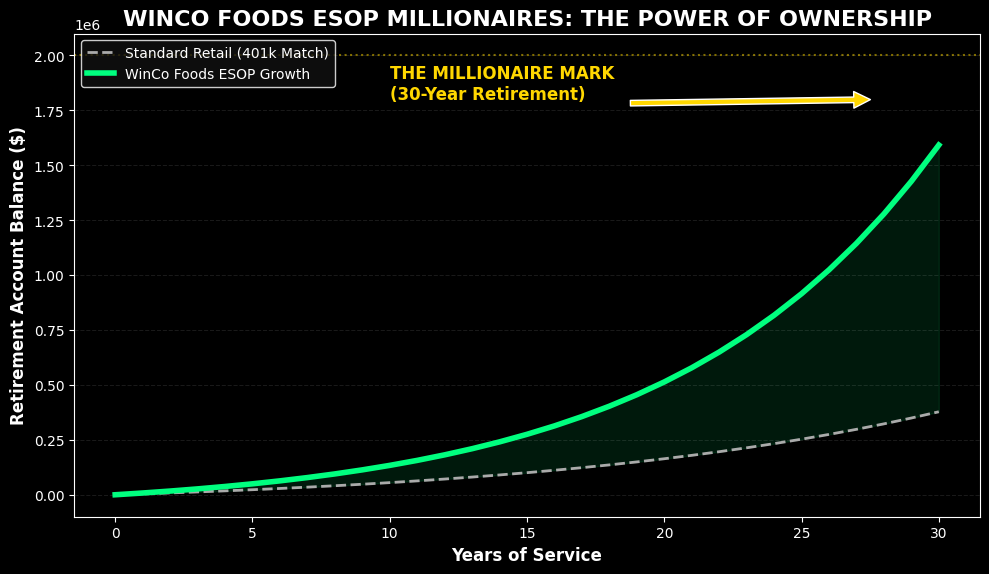
Since 1985, WinCo Foods has operated as a privately held, employee-owned entity. The WinCo Foods ESOP Millionaires are not created through high salaries, but through a structural (gratis) contribution of company stock. Each year, the company factually contributes approximately 20% of an employee’s annual pay into their ESOP account in the form of WinCo shares. This is not a deduction from their paycheck, but a primary benefit of ownership.
📊 2026 Factual Comparison: Wall Street Retail vs. WinCo Foods
| Metric | Standard Retail (e.g., Walmart) | WinCo Foods (ESOP) |
|---|---|---|
| Ownership Structure | External Shareholders (Wall St) | 100% Local Employees |
| Retirement Vehicle | 401(k) + Small Match | ESOP (Automatic Stock Grants) |
| Profit Allocation | Dividends & Buybacks | Reinvested in Share Value |
Operational Efficiency: Slashing Costs to Fund Owners
To fund the growth of WinCo Foods ESOP Millionaires, the company employs radical cost-saving strategies that bypass financial middlemen. WinCo factually refuses to accept credit cards taking only debit and cash to avoid high merchant processing fees. Additionally, by utilizing a “Bag-Your-Own” model, they lower labor overhead. Every cent saved through these operational “nuances” is factually funneled back into lower prices for customers and higher share value for the employee-owners.
Step-by-Step: How the WinCo Model Generates Wealth
The creation of a millionaire cashier is a 30-year process that utilizes the compounding of private equity. Follow these steps to understand the wealth-building journey:
- Entry and Vesting: An employee becomes eligible for the ESOP after 1,000 hours of service. Factually, vesting occurs gradually, ensuring long-term commitment.
- Annual Contribution: The company evaluates annual profits and grants new shares to each employee. In 2026, this contribution often reaches 20% of the employee’s gross annual pay.
- Internal Valuation: Because the company is private, an independent auditor factually determines the share price based on company performance. Historically, WinCo shares have outperformed the S&P 500 index over multiple decades.
- The Ownership Incentive: Employees act as “Sovereign Managers.” They factually reduce inventory shrinkage (theft/damage) because they recognize that every lost item directly reduces the value of their own retirement account.
Factual Data: The $2M Retirement Reality
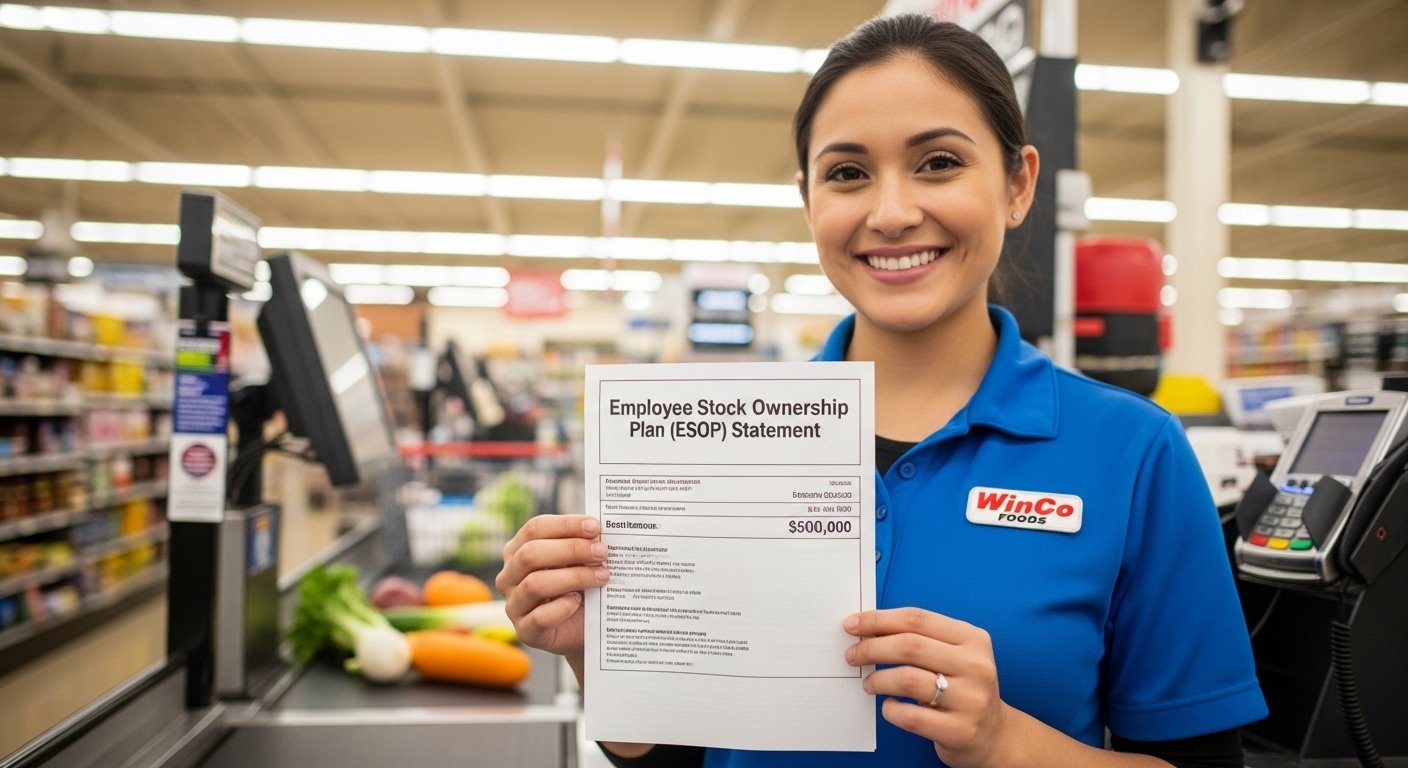
In 2026, reports indicate that over 500 current and former WinCo employees have ESOP balances exceeding $1 million. For long-term employees with over 30 years of service, accounts exceeding $2 million are factually common. This is achieved without the employee ever making a single out-of-pocket contribution, proving that the WinCo Foods ESOP Millionaires model is the most effective private-sector solution to the “Working Poor” crisis.
Checklist: Identifying Sustainable Employee Ownership
Before assuming any ESOP is a path to wealth, personally verify these factual items based on the WinCo benchmark:
- [ ] Contribution Type: Is the company granting shares (Gratis) or just allowing you to buy them at a discount? (Grants are superior).
- [ ] Company Leverage: Is the ESOP heavily burdened by debt used to buy out the founder? (Lower debt is safer).
- [ ] Operational Moat: Does the company have a factual way to save costs (like WinCo’s debit-only policy) to fund the ESOP?
- [ ] Audit Transparency: Is the share price determined by a reputable, independent third-party auditor?
Ownership as a Strategy: Your Next Steps
The success of WinCo Foods ESOP Millionaires proves that “Labor is Capital.” When workers are given 100% skin in the game, they out-compete traditional models through sheer operational efficiency and loyalty. For those seeking to secure their financial future in 2026, it is highly recommended to seek out “Employee-Owned” opportunities or advocate for ESOP structures within your own organization. Protecting your wealth means recognizing that the most valuable asset you can own is the company where you spend your time. For more factual data on ESOP benefits, visit the official ESOPAssociation.org or NCEO.org websites.