
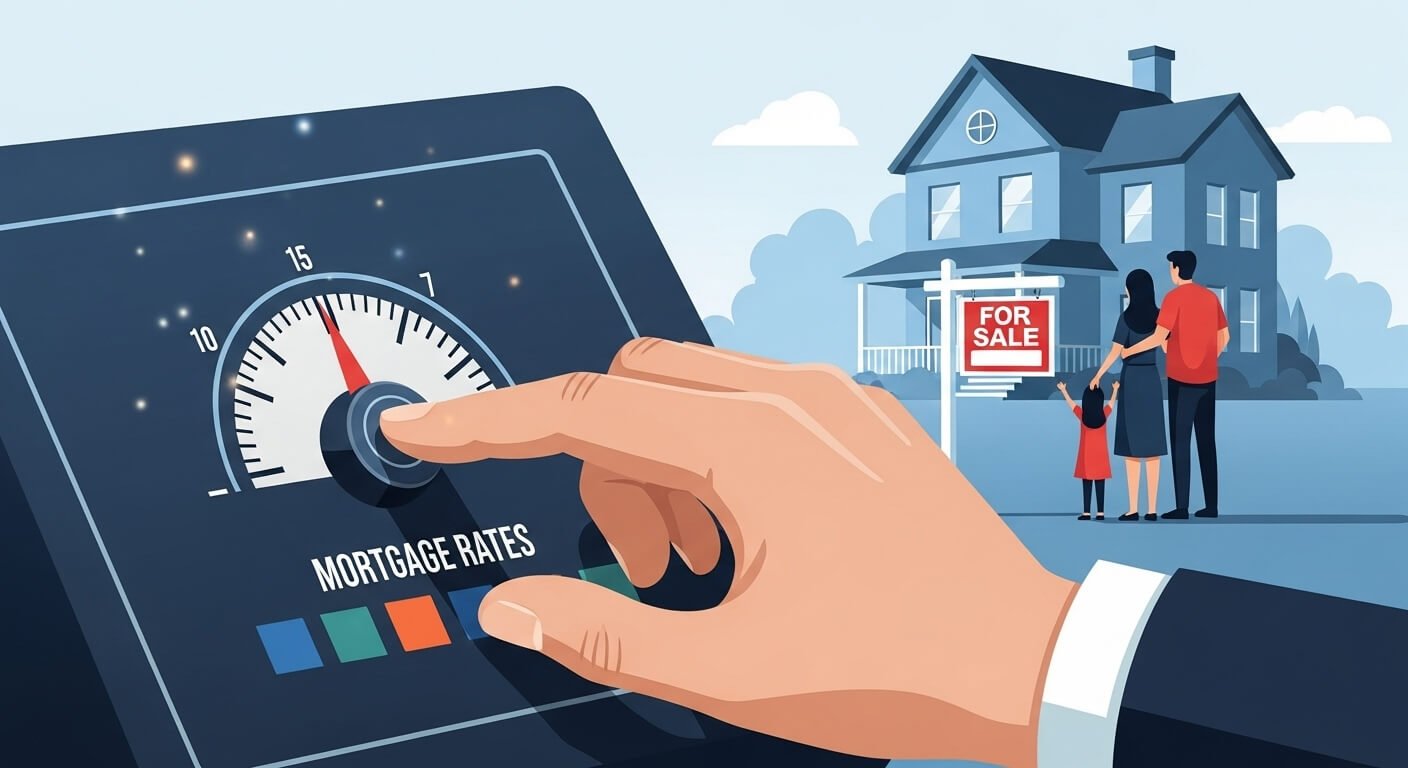
I’m sure many of you have been anxiously watching the housing market, just like I have. It’s been a wild ride since 2022, with mortgage rates climbing from historic lows and home prices soaring. We’ve all seen how challenging it’s become to buy a home, and many potential buyers have been pushed to the sidelines. It’s frustrating, right? But with the Federal Reserve recently making its first rate cut of 2025, a lot of us are starting to feel a glimmer of hope. Could this be the turning point we’ve been waiting for? Let’s dive in and see what’s really happening. 😊
The Fed’s Rate Cut: What You Need to Know 🤔
The Federal Reserve doesn’t directly set mortgage rates, but its decisions have a significant impact on them over time. In September 2025, the Fed made its first rate cut of the year, lowering the federal funds rate by a quarter of a percentage point to a range of 4% to 4.25%. This move was largely a response to a cooling labor market and persistent inflation. Following this announcement, mortgage rates initially saw a brief dip, with the average 30-year fixed rate falling to a three-year low of 6.35% as of September.
It’s a common misconception that a Fed rate cut will immediately cause mortgage rates to plummet. However, that’s not always the case. For example, after the Fed cut rates three times in late 2024, mortgage rates actually rose and even climbed to over 7% by mid-January 2025. This time, mortgage rates have shown some volatility, with the average 30-year fixed rate ticking up slightly to 6.34% for the second straight week in October 2025.
Mortgage rates are heavily influenced by the 10-year Treasury yield, which lenders use as a guide for pricing home loans. When the Fed signals a rate cut, it often sends this yield lower, but other economic factors like inflation and labor market data can cause rates to move in unexpected ways.
A Look at the Numbers: Where Are Rates Headed? 📊
So, what are the experts saying about the future of mortgage rates? While there’s no crystal ball, some major players in the housing industry have offered their forecasts.
As of late September 2025, Fannie Mae projects that the average 30-year fixed rate could fall to 6.4% by the end of 2025 and even further to 5.9% by the end of 2026. The Mortgage Bankers Association is a bit more conservative, predicting rates will slightly decrease to 6.5% by the end of this year. Meanwhile, the National Association of Home Builders sees rates averaging around 5.86% in 2025.
| Organization | 2025 Forecast | 2026 Forecast |
|---|---|---|
| Fannie Mae | 6.4% (by year-end) | 5.9% (by year-end) |
| Mortgage Bankers Association | 6.5% (by year-end) | Not available |
| National Association of Home Builders | 5.86% (average) | Not available |
Even if rates trend downward, they are unlikely to return to the historic lows we saw during the pandemic without a major economic shock. Most experts expect rates to stay in the mid-6% range through the end of 2025.
The “Rate-Lock Effect” and Your Decision 🏡
One of the biggest challenges in today’s housing market is the “rate-lock effect”. Many existing homeowners have locked in extremely low mortgage rates from before 2022, so they’re hesitant to sell. Why would you trade a 3% mortgage for a 6% one, even if you want a new home? This has limited the supply of existing homes for sale, which has helped keep home prices from dropping significantly.
For homebuyers, this creates a unique situation. While there might be less competition in the market right now, there are also fewer homes to choose from. However, if rates continue to fall, this could bring more buyers back into the market, which might increase competition and potentially push prices back up. So, if you’re waiting for the perfect moment, you have to weigh the pros and cons. Waiting for a lower rate might mean you’ll be competing against more people for a smaller number of available homes.
Final Takeaway: Your Next Move 📝
The housing market right now is a bit of a balancing act. On one hand, you have rising inventory and potential for lower rates, which is great for affordability. On the other, home prices are still elevated and the market is far from predictable.
- Don’t Time the Market: Trying to wait for the absolute lowest rate could mean you lose out on the perfect home and face increased competition.
- Check Your Credit: The best way to secure a good rate, regardless of Fed policy, is to have a strong credit score.
- Shop Around: Lenders can offer different rates and incentives. It’s smart to get quotes from multiple lenders to find the best deal.
- Consider Refinancing: If you buy now and rates drop later, you can always refinance your mortgage. This is a common strategy to secure a lower rate in the future.
The key is to focus on what you can control. Figure out your budget, get pre-approved, and find a home that fits your needs now, rather than betting on an unpredictable market. The path to homeownership can be a marathon, not a sprint! Good luck with your home search! 😊