
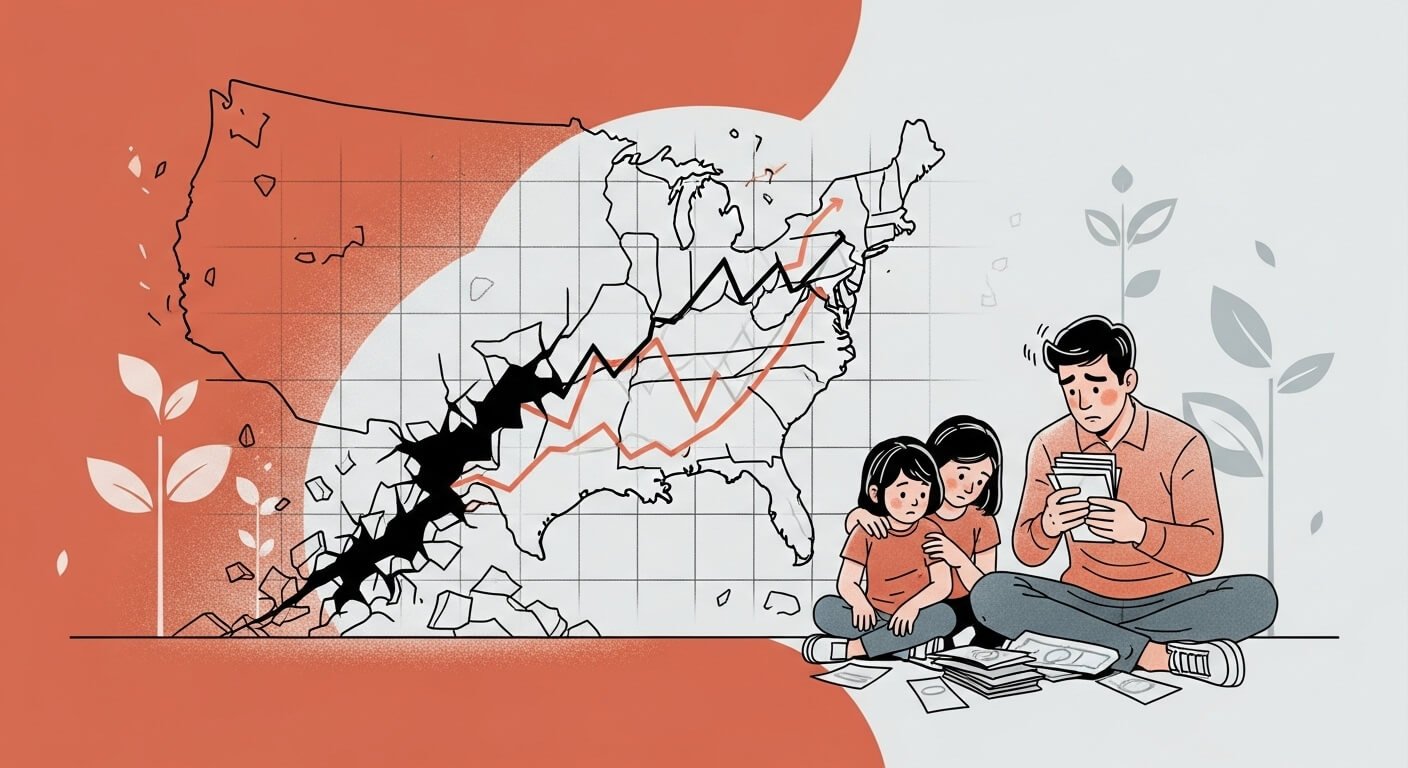
It seems like every time you turn on the news, there’s another report about economic uncertainty. I’ve been there myself, worrying about finances and hearing about companies struggling. So, when I saw the headlines about rising bankruptcy filings in the U.S., I had to dig a little deeper. Is this a sign of an impending crisis, or something else entirely? Let’s explore the numbers and the reasons behind them to get a clearer picture. 😊
The Big Picture: What the Numbers Say 📊
Overall, U.S. bankruptcy filings have been on the rise. Total filings surged by 16% in the 12 months leading up to June 30, 2024, reaching 486,613 new cases, up from 418,724 the year before. Business filings saw an even sharper increase, jumping by 40.3%. But it’s not just businesses feeling the heat.
Personal bankruptcy filings are also on the rise, with some data suggesting they hit their highest level since before the pandemic. For example, personal filings were up 16% in October compared to the previous year. This trend reflects the steady rise of financial stress that many Americans have been dealing with for years, not just recent economic shifts.
While bankruptcy filings are increasing, they are still significantly below pre-pandemic levels. During the pandemic, government aid helped many people pay down their debt, which led to a sharp drop in filings. Now, with those lifelines gone, we’re seeing a return to more normal, pre-COVID-19 levels of filings.
The Driving Factors: Why Filings Are Rising 🤔
So, why are these filings increasing? It’s not just one thing. A few major factors are putting pressure on both businesses and consumers.
| Factor | Impact |
|---|---|
| High Interest Rates & Inflation | These are cited as top drivers of financial distress for both companies and consumers. Higher rates make borrowing more expensive, while inflation erodes purchasing power. |
| Record Debt Levels | American households are carrying a record $18 trillion in debt, and more people are falling seriously behind on payments. |
| Policy & Regulatory Changes | An uncertain regulatory and policy landscape is emerging as a new driver of corporate distress. For example, companies in the clean energy sector have cited public policy as a negative impact on their business. |
| Tariff Uncertainty | Some companies, like a wheel manufacturer and a home furnishings company, have cited trade policy and tariffs as drivers of their distress. This can fuel inflation and squeeze household budgets. |
A rise in filings doesn’t automatically mean we’re heading for a recession. Many of these bankruptcies are a delayed result of years of financial strain, not just current conditions. For businesses, it can be a way to restructure and stay afloat, not necessarily to shut down entirely.
Personal Debt & The Road Ahead 👩💼👨💻
It’s no secret that many people are feeling the squeeze. Total household debt is at an all-time high of $18 trillion. A lot of people are struggling with debt for years before they even consider bankruptcy. This is a reflection of the challenges Americans have faced with flatlining real incomes and rising costs since the pandemic ended.
Navigating a Chapter 12 Bankruptcy
For farmers, for instance, a Chapter 12 filing can be a strategic move. It doesn’t mean the farm is going out of business. Instead, it’s designed to help them continue operating, sometimes on a smaller scale, after they’ve restructured their finances.
- Strategic Restructuring: Allows farms to avoid complete liquidation during lean times.
- Financial Relief: Helps convert short-term debt, like operating loans, into more manageable long-term debt.
Final Thoughts: A Look Ahead 📝
The rise in U.S. bankruptcy filings is a clear signal of ongoing financial stress for both individuals and businesses. While it’s not necessarily a harbinger of a major crash, it shows that many are still navigating a tough economic environment, squeezed by high interest rates, inflation, and a mountain of debt. It’s a reminder that even when the overall economy seems stable, the financial realities for many can be quite different.
What do you think? Are these trends something to worry about, or just a market correction back to normal? Let me know your thoughts in the comments! 😊