
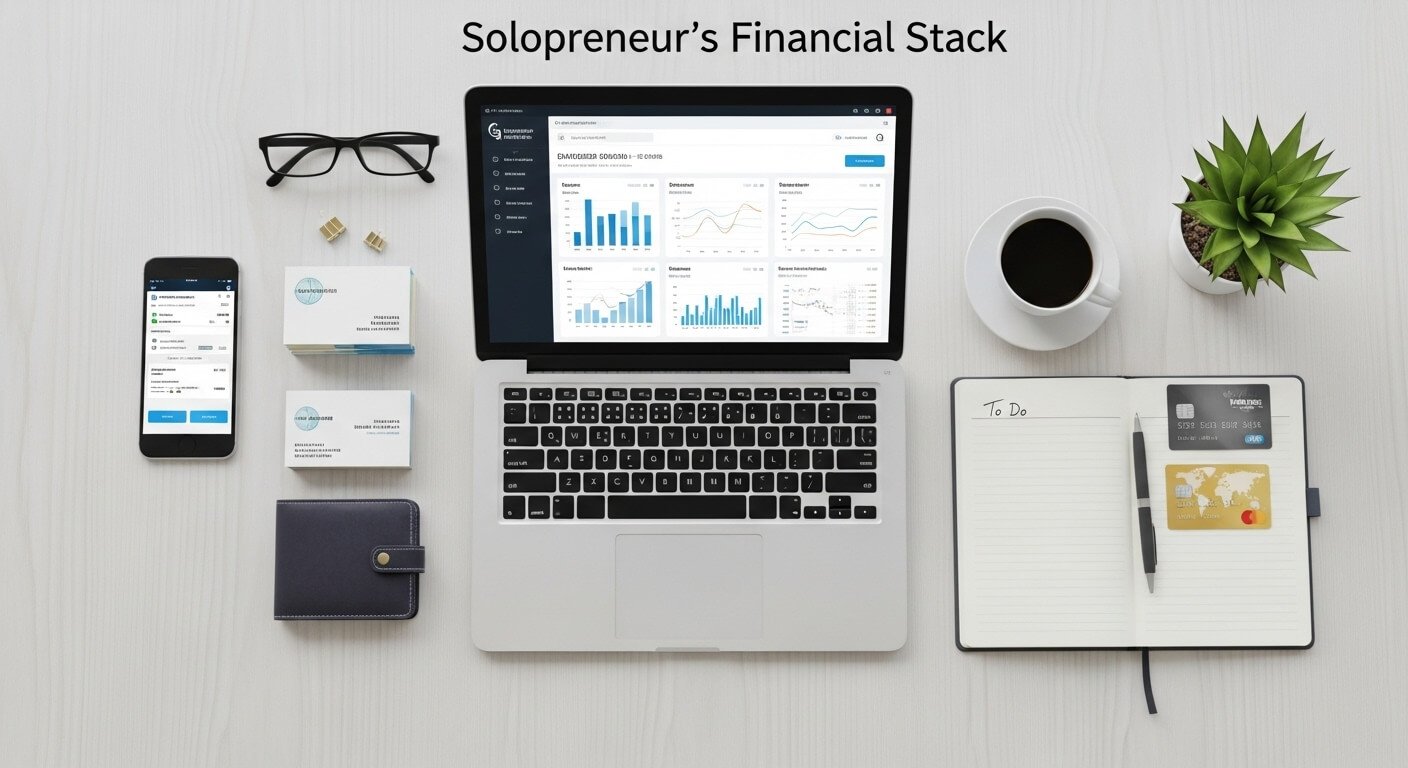
I remember when I first started my solopreneur journey. The freedom was exhilarating, but the financial side? Not so much. I was juggling spreadsheets for expenses, creating invoices in a Word doc, and honestly, just guessing when it came to taxes. It felt like I was duct-taping my business finances together. If that sounds familiar, you’re in the right place. Building a solid financial “stack” is a game-changer, and it’s way easier than you think! 😊
Accounting: The Foundation of Your Stack 🤔
First things first, you need a single source of truth for your finances. A good accounting tool is the heart of your stack, connecting everything and giving you a clear picture of your business’s health. Forget spreadsheets; we need automation here. This software will track income, categorize expenses, and generate the reports you’ll need for tax time and beyond.
I personally recommend QuickBooks Self-Employed. It’s built specifically for freelancers and solopreneurs. The best part is its ability to automatically scan your bank accounts and credit cards to help you categorize transactions as business or personal with a simple swipe. It even estimates your quarterly taxes for you, which is a lifesaver.
Look for an accounting tool that can grow with you. While QuickBooks Self-Employed is great for starters, if you plan on hiring employees or creating a more complex business structure, you might consider QuickBooks Online’s ‘Simple Start’ or ‘Essentials’ plans.
Invoicing & Payments: Getting Paid on Time 📊
Nothing kills momentum like chasing down late payments. Your invoicing and payment processing needs to be seamless, professional, and easy for your clients. This is where a dedicated payment gateway comes in. It should integrate directly with your accounting software to make reconciliation automatic.
For this, my go-to is Stripe. It’s incredibly powerful and flexible. You can create and send professional invoices directly from the Stripe dashboard, and it integrates flawlessly with QuickBooks. When a client pays a Stripe invoice, the transaction, including the processing fee, is automatically recorded and categorized in your books. No more manual data entry!
Your Essential Financial Stack for 2026
| Category | Recommended Tool | Key Feature |
|---|---|---|
| Accounting | QuickBooks Self-Employed | Automatic expense tracking |
| Invoicing & Payments | Stripe | Seamless accounting integration |
| Business Card | Brex | No personal guarantee required |
| Retirement | Solo 401(k) | High contribution limits |
Always keep your business and personal finances separate! Using a dedicated business bank account and credit card is non-negotiable. It makes bookkeeping a hundred times easier and protects your personal assets.
Business Card & Tax Payments 🧮
A dedicated business credit card simplifies expense tracking. I’m a huge fan of Brex because it’s designed for businesses, not individuals. They offer high limits without requiring a personal guarantee, which is a big deal for solopreneurs just starting. Plus, its rewards are tailored to business expenses like software and remote work tools.
📝 Tax Payment Strategy
Quarterly Estimated Taxes = (Estimated Annual Income × Tax Rate) / 4
When it comes to paying taxes, your accounting software is your best friend. QuickBooks Self-Employed will calculate your estimated quarterly tax payments. You can then pay them directly through the IRS Direct Pay website. It’s simple, free, and you get immediate confirmation.
🔢 Tax Savings Calculator
Retirement: Planning for Your Future 👩💼👨💻
When you're your own boss, no one is setting up a 401(k) for you. It's 100% on you to save for retirement. The good news is that solopreneurs have fantastic options. The best one, in my opinion, is the Solo 401(k). It allows you to contribute as both the "employee" and the "employer," meaning you can save a significant amount of money each year—far more than a traditional IRA.
You can open a Solo 401(k) at most major brokerage firms like Fidelity, Charles Schwab, or Vanguard. Start as early as you can, even if it's a small amount. The power of compounding is your best friend for long-term growth.
Putting It All Together: A Real-World Example 📚
So, how does this all work in practice? Let's look at a simple workflow for a fictional solopreneur, a graphic designer named Alex.
Alex's Monthly Workflow
- Invoicing: Alex sends a client an invoice for a $2,000 project through Stripe.
- Payment: The client pays with a credit card. Stripe deposits $1,941 into Alex's business bank account (after fees).
Automated Backend Process
1) The $2,000 income and the $59 Stripe fee are automatically imported and categorized in QuickBooks.
2) QuickBooks updates Alex's estimated quarterly tax liability based on this new income.
Final Result
- Time Saved: Alex spends minutes, not hours, on bookkeeping.
- Financial Clarity: Alex knows exactly how much profit was made and how much to set aside for taxes.
By connecting these best-in-class tools, Alex has created an automated system that handles the tedious financial admin, freeing up time to focus on design work and finding new clients.
Conclusion: Your Solopreneur Financial Stack for Success 📝
Building your financial stack is one of the most empowering things you can do as a solopreneur. It transforms your financial management from a source of stress into a streamlined asset for your business.
By choosing the right tools that work together, you create a system that not only saves you time but also provides the clarity you need to make smart business decisions. What does your current financial stack look like? I'd love to hear about it in the comments! 😊