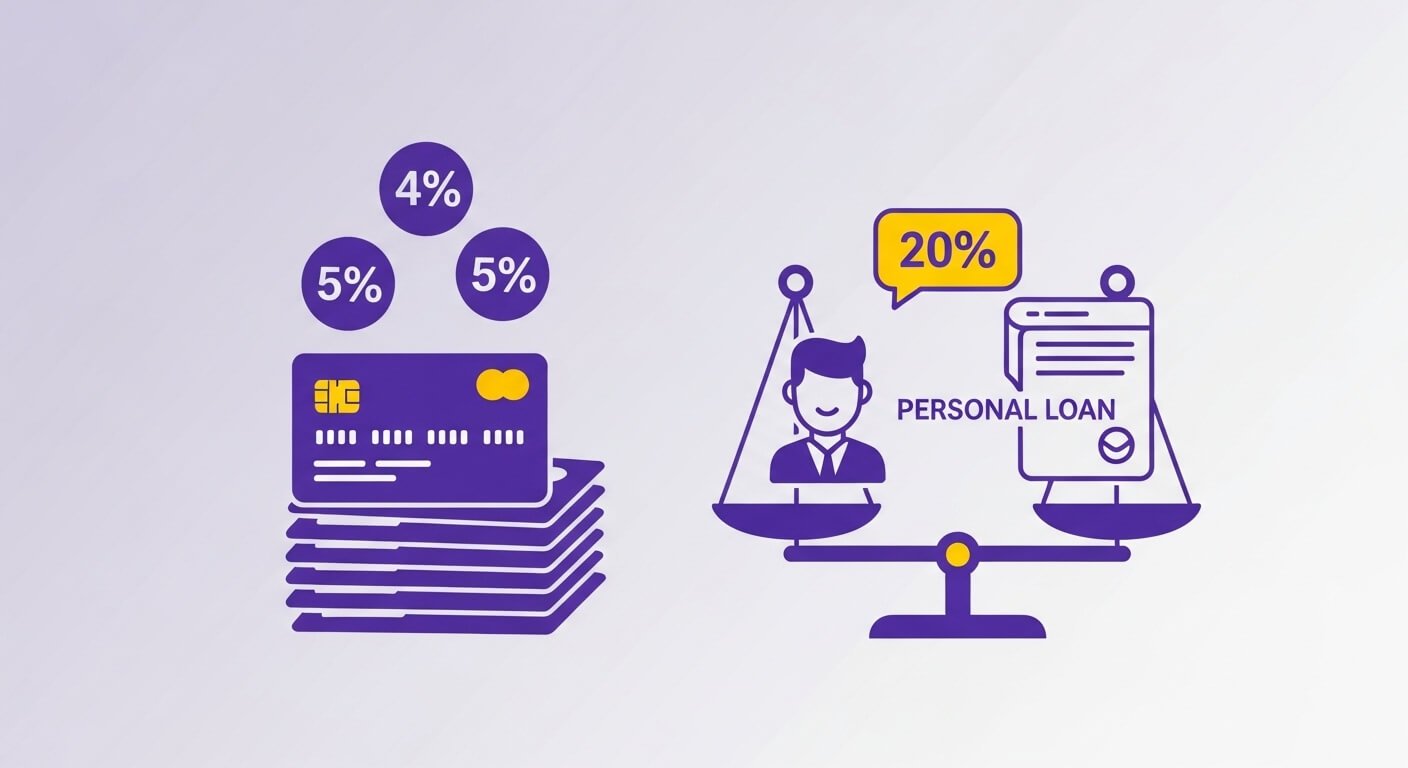
Hey there! Navigating the world of personal finance can be super confusing. One minute you’re thinking about a big purchase, and the next you’re staring at two different options: a personal loan and a credit card. It’s not always clear which one is the right fit. They both let you borrow money, but the way they work and the costs involved are totally different. 😊
Understanding the Basics: Rates & APRs 🤔
First things first, let’s talk about the terms themselves. You’ll hear “interest rate” and “APR” thrown around a lot. While they sound similar, there’s a key difference when it comes to loans versus credit cards.
An interest rate is simply the cost of borrowing money, expressed as a percentage. But the Annual Percentage Rate (APR) is the true cost, because it includes the interest rate plus any fees associated with the loan.
For credit cards, the interest rate and APR are usually the same because they typically don’t have extra fees bundled into the rate. Personal loans, on the other hand, can have an APR that is higher than the interest rate because it includes fees like origination fees.
Personal Loans vs. Credit Cards: A Side-by-Side Look 📊
When you’re comparing a personal loan and a credit card, you’ll find they have very different structures. This table can help you visualize the key distinctions.
Key Differences at a Glance
| Feature | Personal Loan | Credit Card |
|---|---|---|
| Rate Type | Fixed (stays the same) | Variable (can change) |
| Typical APR | 6-36% | 15-29% |
| Repayment | Fixed monthly payments over a set term | Variable payments (minimum or full balance) |
| Fees | Origination fees, late fees | Annual fees, balance transfer fees, late fees |
| Access to Funds | A single lump sum | Revolving credit line |
As you can see, a personal loan is a structured, one-time solution, while a credit card is a flexible, ongoing tool. Your credit score is a major factor in what rates you’ll be offered for both.
Some personal loans have a prepayment penalty, which means you could be charged a fee for paying off your loan early. Always check the terms before you sign!
When to Use Which: Practical Scenarios 👩💼👨💻
So, now that we know the differences, how do you decide which one is right for you? It really comes down to your financial goal.
Choose a Personal Loan If… 📝
- Debt Consolidation: If you’re struggling with multiple high-interest credit card balances, a personal loan is an excellent tool to combine them into one monthly payment with a potentially much lower interest rate. This can save you thousands of dollars in interest alone.
- Large, One-Time Purchases: For big expenses like a wedding, home renovation, or medical bills, a personal loan provides a lump sum of cash with a set repayment plan and often a lower rate than a credit card.
- You Need Structure: The fixed payments and clear repayment term of a personal loan can help you stay disciplined and know exactly when you’ll be debt-free.
Choose a Credit Card If… 💳
- Daily Spending & Rewards: Credit cards are perfect for everyday purchases, especially if you get rewards like cash back, points, or travel miles.
- You Can Pay in Full: If you pay your balance in full each month, you can essentially borrow money for free and avoid interest charges entirely.
- You Qualify for a 0% Intro APR: If you have a large purchase you can pay off quickly, a 0% introductory APR offer can be a great way to finance it without paying any interest.
Example: A Debt Consolidation Scenario 📚
Let’s look at a real-world example. Imagine you have $15,000 in credit card debt spread across a few cards, all with an average APR of 22%.
The Scenario
- Current Debt: $15,000 in total credit card debt.
- Current APR: 22% average.
The Calculation
1) Credit Card Interest: $15,000 x 22% = $3,300 in annual interest.
2) Personal Loan Alternative: A personal loan with a 14% APR. Annual interest would be $15,000 x 14% = $2,100.
The Result
– Annual Savings: $3,300 – $2,100 = $1,200.
– Conclusion: In this case, consolidating your debt with a personal loan could save you $1,200 in interest each year.
This example shows how a personal loan can dramatically slash your interest payments and simplify your financial life.
Making the Right Choice for You 📝
So, what’s the final word? The best choice truly depends on your specific situation. If you need a large, one-time sum for a major expense and prefer predictable, fixed payments, a personal loan is often the better option. On the other hand, for day-to-day spending and building credit history, a credit card’s flexibility and rewards can’t be beaten, especially if you pay off the balance every month.
Ultimately, it’s about being honest with your financial habits and goals. The more you understand these tools, the more empowered you’ll be to make a decision that’s right for you. If you have any questions, feel free to leave a comment below! 😊
Key Takeaways
Frequently Asked Questions ❓