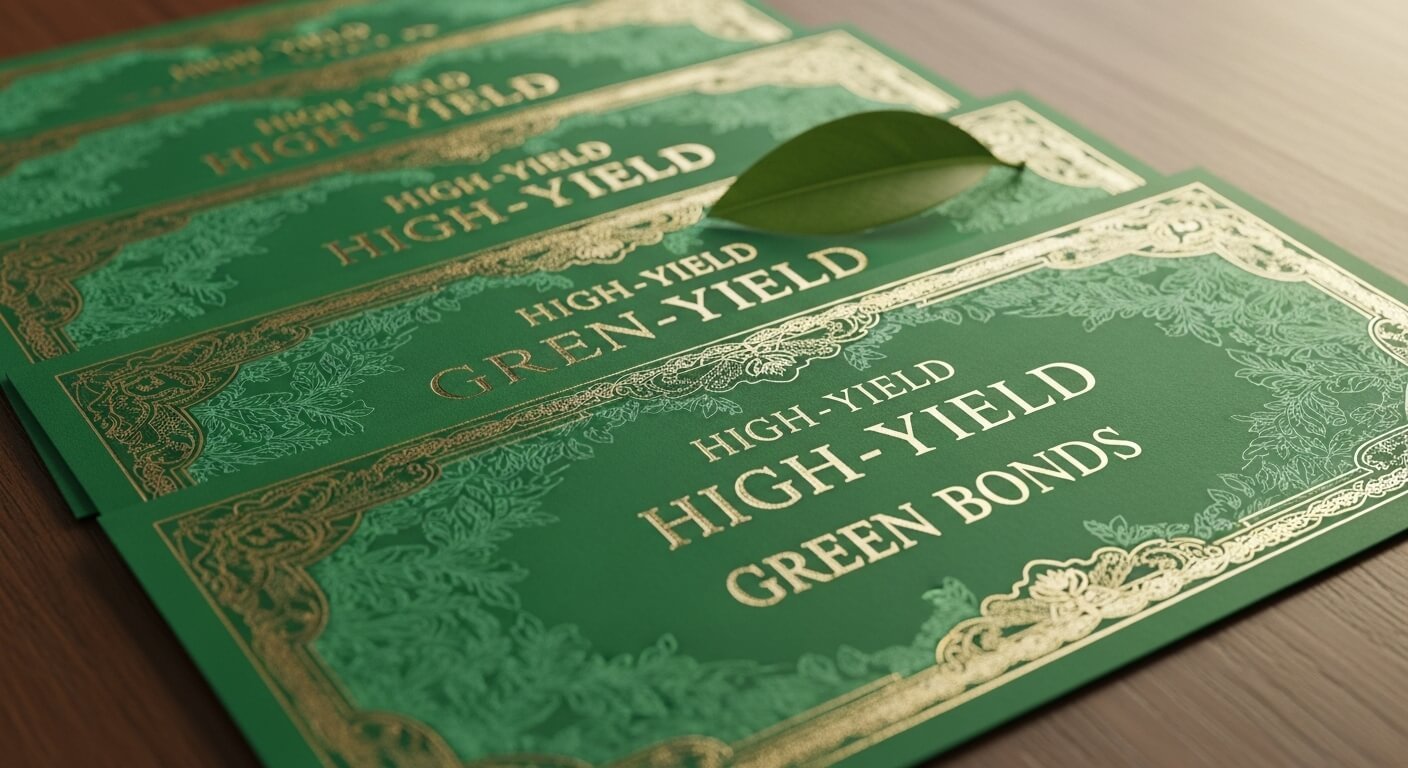
I remember staring at my investment portfolio a while back and feeling… well, a little disconnected. The numbers were going up, which was great, but I had no idea what my money was actually *doing* in the world. Was it funding another soulless skyscraper? Or maybe a company with questionable environmental practices? I wanted my investments to reflect my values, but I also, you know, wanted them to perform well. It felt like I had to choose between profit and principle. That’s the exact dilemma that **high-yield green bonds** aim to solve. If you’ve ever felt that way, you’re in the right place! 😊
First Things First: What is ESG & Where Do Green Bonds Fit? 🤔
You’ve probably heard the acronym “ESG” floating around. It stands for Environmental, Social, and Governance, and it’s a framework for evaluating how a company operates beyond just its financials. Think of it as investing with a conscience. We’re looking at a company’s carbon footprint (Environmental), how it treats its employees and community (Social), and its leadership and transparency (Governance).
Green bonds fit squarely into the “E” of ESG. In simple terms, a green bond is a loan you make to a company or government, but with a specific, eco-friendly purpose. The money raised is earmarked *only* for projects with positive environmental benefits, like building a wind farm, developing clean transportation, or funding reforestation projects. It’s one of the most direct ways to channel your capital toward healing the planet.
The key difference between a green bond and a regular bond is the “use of proceeds.” With a regular bond, the issuer can use the money for general corporate purposes. With a green bond, they commit to using it for pre-defined, eligible green projects, and they often report on the impact of those projects.
The “High-Yield” Twist: Bumping Up Your Impact and Returns 📊
Okay, so we get green bonds. But what does “high-yield” mean? In the bond world, “high-yield” is often a polite term for “higher-risk.” These bonds are issued by entities that credit rating agencies consider to be sub-investment-grade. This could be a younger company in the renewable energy space or a government in a developing nation launching its first major green infrastructure project.
Because the risk of the issuer defaulting on its payments is higher, they have to offer a higher interest rate (yield) to attract investors. So, the trade-off is clear: you take on more risk for the potential of a better return on your investment, all while funding projects that might not have access to traditional, lower-cost financing. It’s where impact investing meets a more aggressive financial strategy.
Comparing Your Bond Options
| Feature | Traditional Bond | High-Yield Green Bond |
|---|---|---|
| Use of Proceeds | General purposes | Specific green projects |
| Issuer’s Credit Rating | Varies (can be high or low) | Sub-investment-grade |
| Potential Yield | Varies by risk | Higher |
| Associated Risk | Varies by rating | Higher (credit/default risk) |
The biggest risk with any high-yield investment is default risk—the chance the issuer won’t be able to pay you back. Another concern specific to green bonds is “greenwashing,” where the environmental impact is exaggerated. That’s why independent verification and transparent reporting are so important.
Demystifying Yield: Your Simple Calculator 🧮
“Yield” can sound like a complicated financial term, but the basic concept is pretty simple. The *current yield* of a bond tells you the annual return you can expect based on its current market price. Let’s break it down with a quick tool.
🔢 Quick Yield Calculator
How to Actually Invest: Your Gateway to Green Bonds 👩💼👨💻
So, how can you actually get your hands on high-yield green bonds? Unfortunately, you usually can't just buy individual green bonds directly like you buy a stock. They are typically sold in large blocks to big institutions. But don't worry! For retail investors like us, the easiest and most common way to invest is through **Green Bond ETFs (Exchange-Traded Funds) and Mutual Funds**.
These funds pool money from many investors to buy a diversified basket of green bonds. This instantly gives you diversification (spreading out your risk) and professional management. You can buy and sell shares of these funds easily through a standard brokerage account.
When evaluating a green bond fund, look for these key things:
- Credit Quality: Does the fund focus on investment-grade bonds, high-yield bonds, or a mix? This determines its risk level.
- Expense Ratio: How much does the fund charge annually? Lower is better.
- Third-Party Verification: Does the fund rely on standards from organizations like the Climate Bonds Initiative to verify the "greenness" of its holdings? This helps avoid greenwashing.
- Transparency: Look at the fund's top holdings. Do you recognize the issuers? Are you comfortable with where your money is going?
A Real-World Example: Choosing a Green Bond ETF 📚
Let's imagine an investor named Alex who wants to add green bonds to their portfolio. Alex has a moderate risk tolerance and is looking for both impact and a decent return. Alex finds two (fictional) ETFs:
Alex's Options
- Planet Savers Bond ETF (PSBE): Focuses on highly-rated, investment-grade green bonds from large corporations and governments. Lower risk, with a current yield of 3.5%.
- Green Future High-Yield ETF (GFHY): Focuses on sub-investment-grade green bonds from emerging tech companies and international projects. Higher risk, with a current yield of 6.2%.
Decision Process
Alex uses the investor checklist. Both ETFs have low expense ratios and use third-party verification. The key difference is risk and yield. Since Alex has a moderate risk tolerance and is still new to this space, they decide to allocate 70% of their green bond budget to the safer PSBE for a solid foundation, and 30% to the higher-risk GFHY to capture some of that extra yield and fund more innovative projects.
Blended Result
- By blending the two, Alex creates a custom risk profile with an expected blended yield of around 4.3%. (($3.5 * 0.7) + ($6.2 * 0.3) = 4.31%).
- Alex gets the stability of established green projects and the growth potential of more cutting-edge ones. A win-win!
In a Nutshell: Your Key Takeaways 📝
Diving into a new investment area can feel overwhelming, but high-yield green bonds are a powerful tool for investors who want to do more with their money. It's about aligning your portfolio with the future you want to see.
High-Yield Green Bonds at a Glance
Frequently Asked Questions ❓
Hopefully, this guide has demystified the world of high-yield green bonds for you! It's an exciting space where you can truly put your money to work for a cause you believe in. Have you ever considered ESG investing? Let me know your thoughts in the comments! 😊