
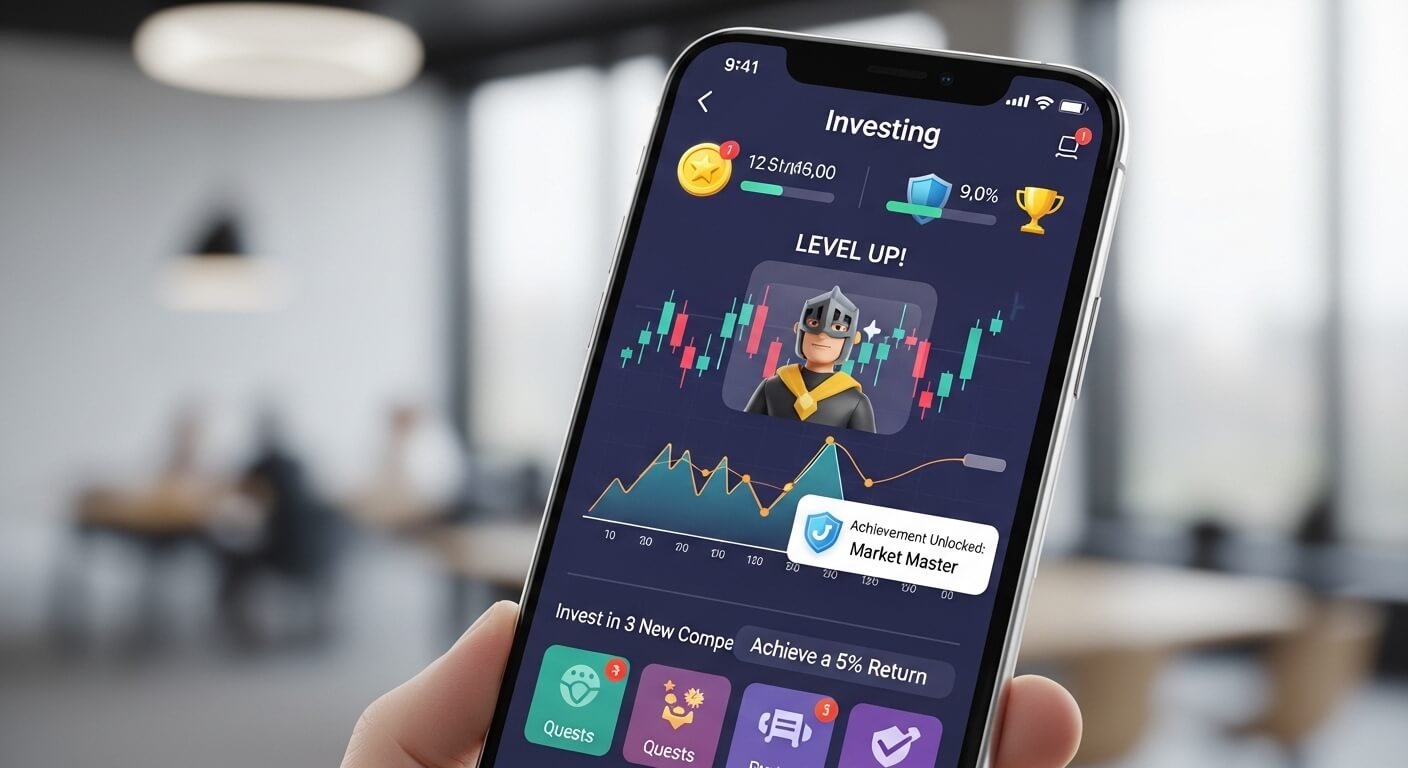
Have you ever opened an investing app just to check your portfolio, and suddenly 20 minutes have passed? You’ve made a few trades, celebrated a little win with a burst of digital confetti, and felt that tiny rush. It feels productive, right?
But lately, I’ve been wondering if what feels like smart investing is actually just… good game design. It’s a fine line, and many of us are walking it without even realizing. Let’s talk about it! 😊
The Psychology of Gamified Investing: A Perfect Slot Machine?
Apps like Robinhood didn’t just make investing accessible; they made it *feel* fun, fast, and effortless. Think about the sleek, minimalist interface, the real-time graphs that twitch with every market move, and the satisfying swipe to trade.
This isn’t just user-friendly design; it’s a carefully crafted psychological experience. Every color, sound, and notification is designed to trigger a dopamine response—the same brain chemical associated with pleasure and reward.
When you see green numbers, you feel good. When you get a notification about a stock’s movement, you feel engaged. The most famous example, of course, is the digital confetti that rains down after a trade.
It’s a classic positive reinforcement technique, making you associate trading with celebration, regardless of whether the trade was actually a smart long-term decision. It conditions you to want to do it again, and again.
This is a core concept of Behavioral Economics, which studies how psychological factors influence the economic decisions of individuals. These apps are masterclasses in applying these principles to finance.
The Hooks of Gamified Investing: Rewards and Aversions 📊
So, what are the specific psychological hooks at play? One of the biggest is **intermittent rewards**. This is the same principle that makes slot machines so addictive. You don’t know when you’ll win, but the possibility of a reward keeps you pulling the lever—or in this case, checking your app.
The unpredictable nature of stock market wins (a stock suddenly jumping 10%) creates a powerful, compelling loop.
Then there’s loss aversion. Psychologically, the pain of losing is about twice as powerful as the pleasure of gaining. Apps often display your portfolio’s value in big, bold numbers. When that number turns red, the feeling is visceral. This can lead to irrational decisions, like panic selling during a dip or, conversely, “revenge trading” to try and recoup losses quickly—often making things much worse.
Rational Investing vs. Gamified Investing: Spot the Difference
| Aspect | Rational Investing | Gamified Behavior |
|---|---|---|
| Time Horizon | Long-term (Years) | Short-term (Minutes/Hours) |
| Decision Basis | Research, Fundamentals | Emotion, Hype, App Alerts |
| Feeling | Calm, Patient, Boring | Excitement, Rush, Anxiety |
| Goal | Wealth Building | The Thrill of a “Win” |
Ask yourself: How often do you trade based on a plan versus an in-the-moment impulse triggered by the app? The answer might surprise you.
Winning the Real Game: The Digital Detox Investing Method 👩💼👨💻
So how do we break free from these addictive designs and become more rational investors? It’s not about deleting the apps, but about changing how we use them. I call it the “Digital Detox Investing Method.” It’s about creating friction and being more intentional.
Your Action Plan 📝
- Turn Off Notifications: This is the most crucial first step. No more price alerts, no more “breaking news.” You decide when to engage with the market, not the app.
- Set a Schedule: Designate specific times to check your portfolio, like once a day or even once a week. Put it on your calendar and stick to it. This eliminates impulsive checking.
- Use a “Cool-Down” Period: Have an idea for a trade? Great. Write it down and wait 24 hours before executing it. This removes emotion from the equation and forces you to re-evaluate with a clearer head.
- Separate Research from Trading: Use a different platform for your research (like a financial news website or desktop software) and only use the app to execute trades you’ve already decided on. This breaks the habit of “browsing” for trades within the app.
Final Thoughts: Key Takeaways 📝
These modern platforms have democratized investing, which is a fantastic development. However, their game-like design can nudge us toward behaviors that are more aligned with gambling than with building long-term wealth. Recognizing the psychological tricks is the first step to overcoming them.
By implementing a few simple rules, like the Digital Detox Investing Method, you can use these powerful tools on your own terms. True investment success is often slow and, dare I say, a little boring. It’s a marathon, not a sprint full of flashing lights and confetti. What are your thoughts on this? Have you ever felt like you were “playing” the market? Let me know in the comments! 😊