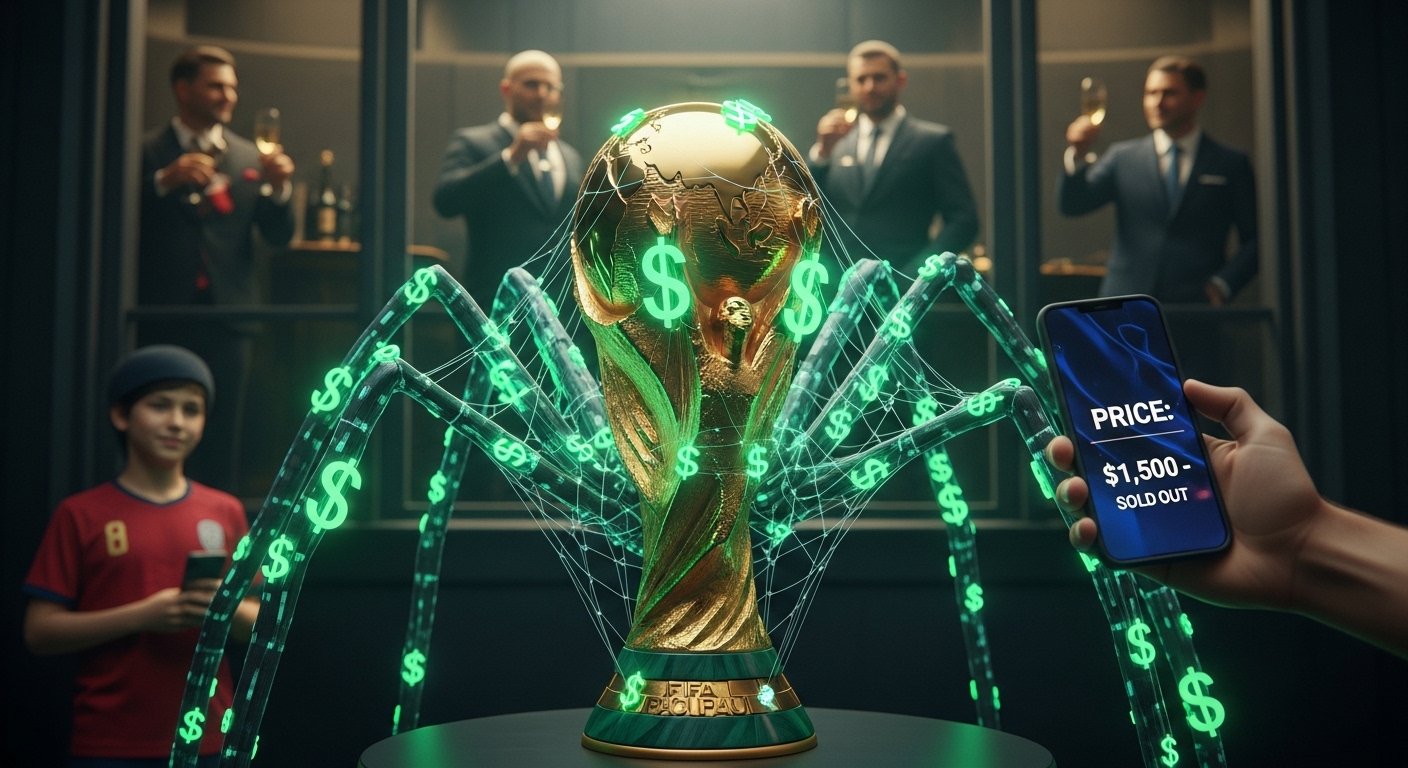
The FIFA World Cup 2026 Ticket Monopoly has fundamentally altered the financial landscape of international sports. In 2026, attending a match is no longer an accessible pastime for the working class but has been factually transformed into a high-stakes asset for corporate entities. This guide examines the mechanics of the “$1.5K Greed Tax” fueled by Dynamic Pricing, the displacement of traditional supporters by corporate hospitality suites, and the double-dipping fee structures that prioritize quarterly profits over the spirit of the game.
The Financial Mechanics of the FIFA World Cup 2026 Ticket Monopoly
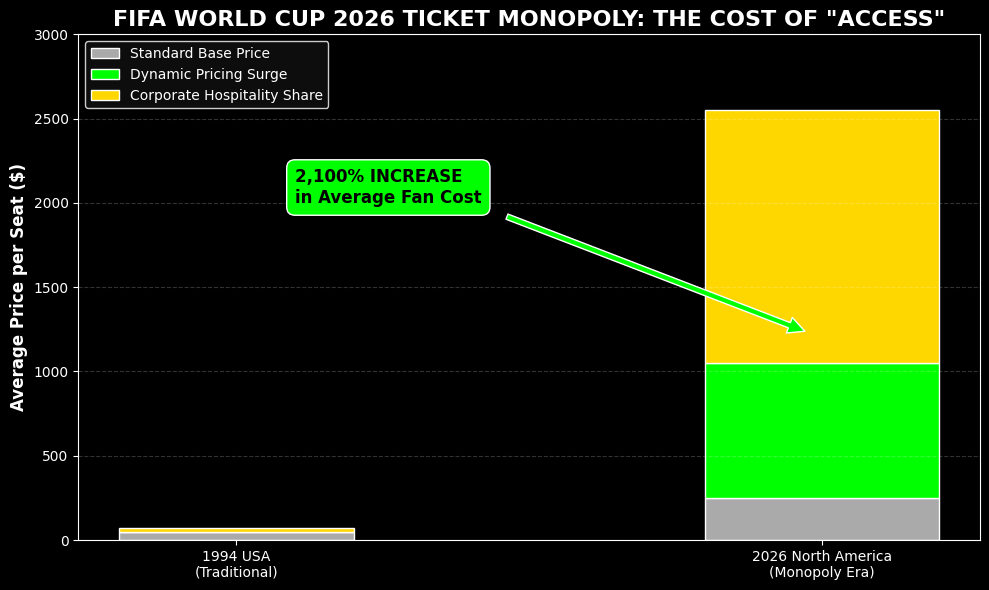
The 2026 ticketing ecosystem is defined by a centralized control mechanism that utilizes “Dynamic Pricing” algorithms. This technology, employed by authorized platform monopolies, factually monitors real-time demand and search frequency to adjust prices instantaneously. For a standard group-stage seat, the FIFA World Cup 2026 Ticket Monopoly has seen prices escalate from a starting point of $150 to a localized “Greed Tax” of $1,500 or more during peak demand windows.
The Corporate Hospitality Takeover
Structural audits of 2026 stadium configurations show that prime viewing areas historically reserved for local supporters have been factually reassigned to “Corporate Hospitality” zones. These luxury suites are marketed to global banking institutions and conglomerates as high-value networking assets. With packages often exceeding $50,000, this transition ensures that a significant percentage of stadium capacity is decoupled from the traditional fan economy, further strengthening the FIFA World Cup 2026 Ticket Monopoly.
Analysis of the Double-Dipping Resale Model
The monetization strategy of the 2026 World Cup relies on a proprietary digital ecosystem that prevents peer-to-peer transfers. This creates a “Double-Dipping” revenue stream for the monopoly platforms:
- Initial Transaction Fee: A service fee (approx. 15-20%) is collected during the primary ticket sale.
- Secondary Transaction Fee: When tickets are relisted on “verified” resale platforms at inflated prices, the platform factually collects a second set of fees from both the reseller and the new buyer.
By controlling both the primary and secondary markets, the FIFA World Cup 2026 Ticket Monopoly extracts value at every stage of the ticket’s lifecycle, effectively monetizing the scarcity they helped create.
📊 2026 Factual Seat Value Comparison
| Category | Primary Target | Average Payout Ratio |
|---|---|---|
| Standard Category | Working Class Fans | Subject to 1,000% Dynamic Surge |
| Corporate Suites | B2B / Wealthy Elites | Fixed Luxury Rate (High Barrier) |
| Official Resale | Secondary Market | Double Fee Extraction (15% + 15%) |
Step-by-Step Guide to Managing Your Sports Entertainment Budget
Navigating the FIFA World Cup 2026 Ticket Monopoly requires a disciplined financial approach to avoid discretionary fund leakage. Follow these steps to audit your 2026 sports spending:
- Verify Official Portals Only: Ensure you are factually transacting on the FIFA.com portal. Third-party “aggregator” sites often hide additional “Processing Fees” that can add 30% to the total cost.
- Calculate the Total Cost of Attendance (TCA): Factor in the Dynamic Pricing surge, local travel inflation, and the “Monopoly Surcharge” at the stadium. If the TCA exceeds 10% of your annual discretionary budget, the financial utility of the event should be re-evaluated.
- Utilize Official Resale Windows: Avoid buying during the initial “FOMO” wave. Data shows that prices often dip slightly during the official resale window as the FIFA World Cup 2026 Ticket Monopoly seeks to fill remaining inventory.
- Identify “Conspicuous Consumption” Triggers: Determine if the desire to attend is based on the sport or the social signal. In 2026, World Cup tickets have become a Veblen good used for social status.
Frequently Asked Questions about the 2026 Ticket Monopoly
Is Dynamic Pricing factually legal for international sporting events?
Yes. As of 2026, most host nations lack specific legislation that caps “market-based pricing” for private entertainment events. The FIFA World Cup 2026 Ticket Monopoly operates within a legal framework that prioritizes “willingness to pay” over equitable access.
Why are tickets exclusively digital in 2026?
Digital-only ticketing ensures total control over the secondary market. By eliminating physical tickets, the platforms prevent peer-to-peer exchanges that do not generate a transaction fee for the monopoly, factually forcing all revenue through their proprietary portals.
Verification Checklist for Your World Cup Ticket Purchase
Before finalizing any 2026 World Cup transaction, personally verify the following factual items to protect your assets:
- [ ] Final Checkout Audit: Does the final price factually match the advertised price, or have “Junk Fees” been added?
- [ ] SafeTix Authenticity: Confirm that the ticket uses a rotating barcode technology to prevent duplication fraud.
- [ ] Refund Policy Verification: Review the official 2026 refund terms for “Dynamic” purchases; often, the Greed Tax portion is non-refundable.
- [ ] Alternative Viewing Options: Evaluate the financial benefit of attending a local “Fan Zone” versus the 2,100% premium of a stadium seat.
Next Steps for Your Personal Financial Sovereignty
Protecting your retirement income in 2026 requires recognizing when a cultural milestone has been weaponized into a financial extraction tool. Once you have audited the costs associated with the FIFA World Cup 2026 Ticket Monopoly, you should have a clearer understanding of your net household budget. It is highly recommended to allocate discretionary funds toward stable, long-term assets or community-based sports that do not utilize “Double-Dipping” fee models. For further information on fighting corporate junk fees, consult the official FTC.gov website to protect your monthly income.