🚀 Visionary Briefing: The Sky Computer
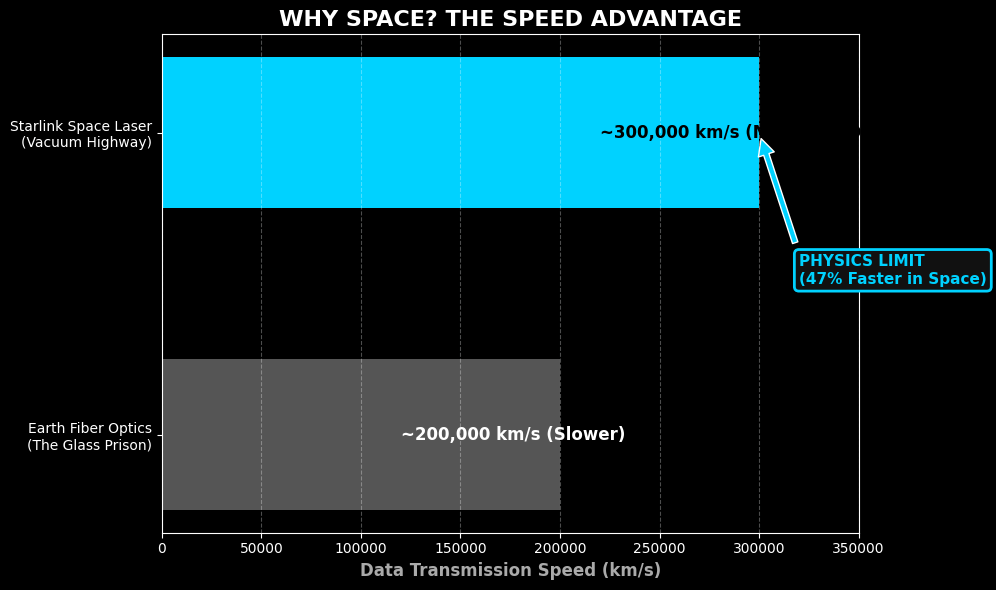
- The “Glass Prison”: Traditional internet is trapped in fiber optic cables, where light travels 47% slower. The Elon Musk Space Data Center uses lasers in a vacuum to achieve true light speed.
- Infinite Energy: In space, the sun never sets. Musk plans to power AI servers with 24/7 free solar energy, solving the Earth’s power crisis.
- Investment Alpha: This shift benefits infrastructure builders ($RKLB) and massive data users ($TSLA). The Starlink IPO will be the ultimate prize.
We often say our data is stored in the “Cloud.” But that cloud is a lie. It is not in the sky; it is in a hot, noisy warehouse in Virginia, burning massive amounts of coal to keep the servers cool.
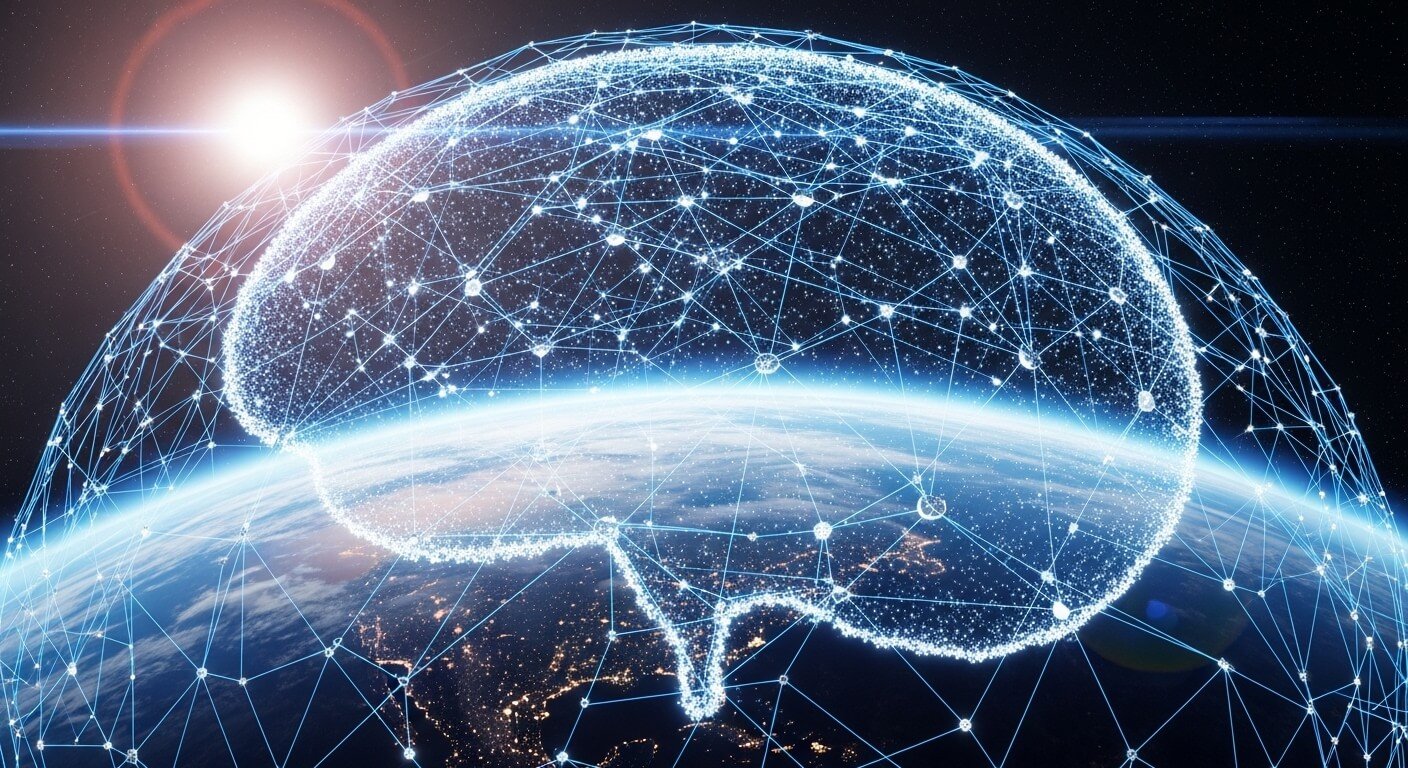
However, Elon Musk is turning the metaphor into reality. He is building the world’s first true Elon Musk Space Data Center. This is not just about providing WiFi to rural areas; it is about moving humanity’s computational power into orbit. It is the rise of the “Sky Computer,” and it changes everything about how the digital economy works.
Elon Musk Space Data Center Advantage 1: Escaping the Glass Prison
Why spend billions to send servers into space? The first reason is Physics.
The internet travels as light. On Earth, that light must travel through fiber optic cables made of glass. Physics dictates that light travels about 47% slower through glass than it does through a vacuum. We call this the “Glass Prison.”
The Vacuum Highway
In the vacuum of space, there is no resistance. Starlink satellites use Optical Inter-Satellite Links (Space Lasers) to beam data at the true speed of light (299,792 km/s). For High-Frequency Trading (HFT) firms in Wall Street, a delay of 0.001 seconds is worth millions of dollars. The Elon Musk Space Data Center offers the fastest possible connection between London and New York, a premium service that finance giants will pay a fortune for.
Advantage 2: Infinite, Free Energy
Earth-based data centers are energy vampires. As AI models grow, the power grid is buckling under the demand. But in space, there are no clouds and no night.
The Elon Musk Space Data Center concept taps into 24/7 solar energy. By placing servers in orbit, Musk bypasses the need for expensive land, complex cooling systems (space is naturally cold), and dirty power plants. It is the ultimate green energy solution: A solar-powered supercomputer floating above the atmosphere.
Advantage 3: Orbital Edge Computing (The Flying Brain)
Old satellites were “dumb mirrors”—they just reflected signals. Starlink satellites are “flying servers.”
This is called Orbital Edge Computing. Instead of sending raw data down to Earth to be processed and then sent back up, the satellite processes the data in space. This is critical for Tesla’s Full Self-Driving (FSD) and military drones. The Elon Musk Space Data Center puts the brain next to the eyes, enabling real-time decision-making on a planetary scale.
The Investor’s Verdict: How to Play the Space Internet
The internet infrastructure is moving from the ground to the sky. Here is how to position your portfolio for the Elon Musk Space Data Center era.
📊 Space Infrastructure Portfolio
| Role | Ticker | Investment Logic |
|---|---|---|
| The Builder | $RKLB (Rocket Lab) | If SpaceX is the Apple of space, Rocket Lab is the Android. They are the “Space Truckers” hauling servers to orbit. |
| The User | $TSLA (Tesla) | Tesla’s Robotaxis will rely on the low-latency Starlink network for global dominance. |
| The Holy Grail | Starlink IPO | When Starlink goes public, it won’t just be a telecom stock. It will be the biggest AI infrastructure play in history. |
LOOK UP, NOT DOWN
The Elon Musk Space Data Center is inevitable. The physics of light and the economics of energy demand it.
Don’t invest in the glass prison of the past. Invest in the vacuum highway of the future.