🍔 Detective’s Briefing: The Psychological Toll
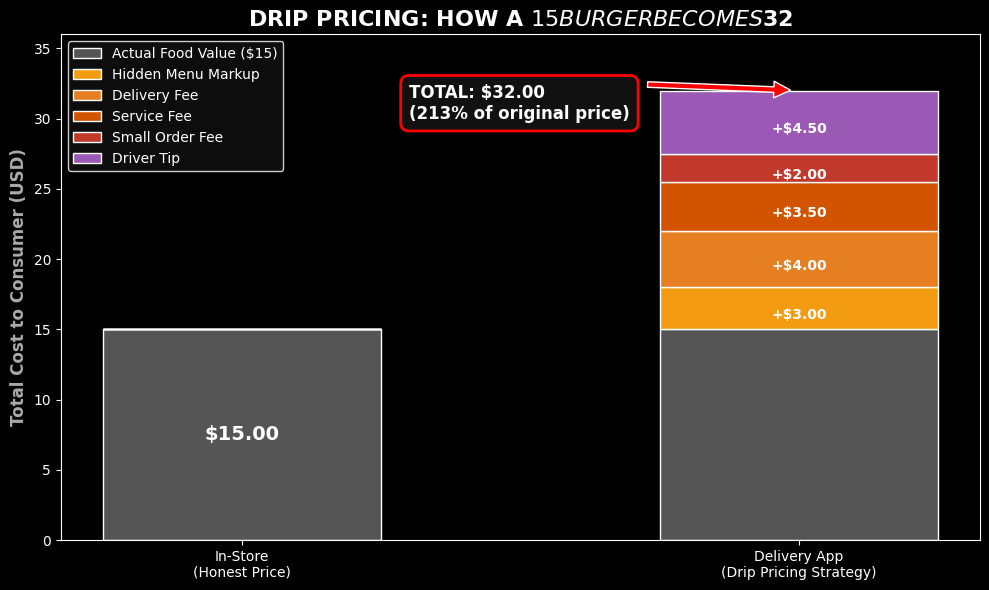
- The Hidden Menu Markup: The **Delivery App Dark Patterns** begin before you even see a fee. Restaurants inflate app menu prices by 10-20% just to survive the 30% platform commission. Your $15 burger is secretly $18 from the start.
- Drip Pricing Strategy: Why don’t you cancel when the price hits $32? Because the app reveals the fees one by one (Service Fee, Delivery Fee, Small Order Fee, Tip). This breaks your psychological resistance.
- The 213% Reality: By the time you hit checkout, you are paying 213% of the actual food’s value. The platforms have engineered the perfect digital tollbooth.
We have all been there. You are craving a standard $15 burger. You add it to your cart on UberEats or DoorDash.
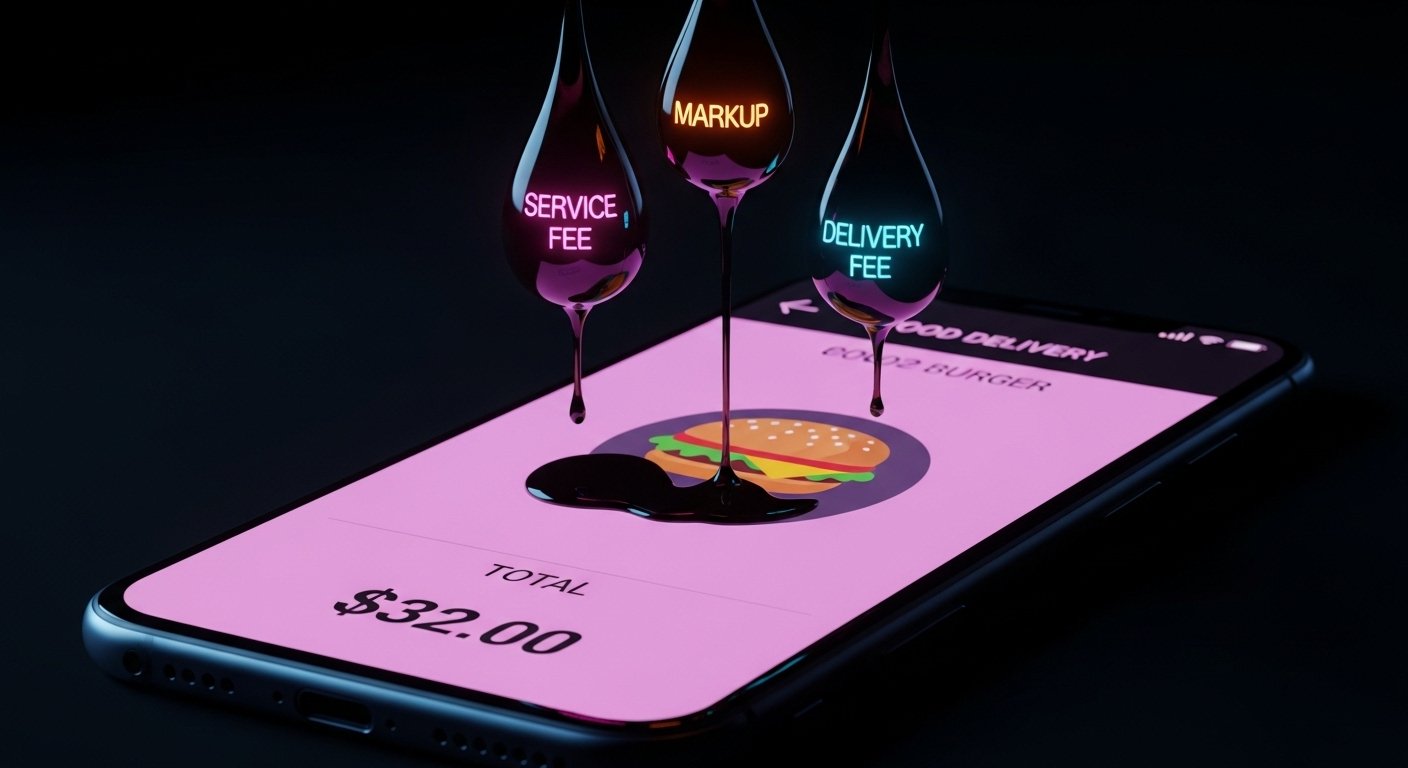
You click “Checkout,” and the final total is suddenly $32.00.
Logically, you should close the app, put on your shoes, and pick up the food yourself. But you don’t. You sigh, authenticate with FaceID, and pay double the price.
Are you just lazy? No. You are a victim of **Delivery App Dark Patterns**. In this behavioral economics file, we break down the specific psychological traps Silicon Valley uses to bypass your financial common sense.
The First Trap: The Hidden Menu Markup
The scam begins with a silent price hike.
Platforms like DoorDash and Uber charge restaurants a predatory commission fee—often up to 30% of the total order. A restaurant operating on a 5% profit margin cannot survive this.
To compensate, restaurants employ a “Hidden Markup.” That $15 burger on the physical menu is listed as $18.00 on the app. The platform turns a blind eye because a higher base price means their 30% cut gets even larger. Before you have even paid for delivery, you have already been taxed.
The Psychology of “Drip Pricing”
If the app showed you a giant button that said “Buy Burger: $32,” you would never click it. The “Sticker Shock” would immediately trigger your brain’s defense mechanism.
Instead, they use a classic **Delivery App Dark Pattern** called “Drip Pricing.” They reveal the pain slowly, drop by drop, using a confusing array of micro-fees:
| Fee Type | The Excuse | Typical Cost |
|---|---|---|
| Delivery Fee | Variable cost based on distance and weather. | $2.99 – $7.99 |
| Service Fee | “Helps us operate the platform.” (Pure profit). | 10% – 15% of Subtotal |
| Small Order Fee | A penalty for not buying enough food. | $2.00 – $3.00 |
| Driver Tip | Passing the burden of paying driver wages to you. | 15% – 25% Suggested |
The Sunk Cost Fallacy
By the time you reach the checkout screen, you have already spent 10 minutes choosing your food and craving the burger. Your brain has committed to the meal. When the final $32 appears, the “Sunk Cost Fallacy“ kicks in. You are too tired to start over or go cook, so you surrender to the **Delivery App Dark Patterns**.
The Detective’s Verdict: Mastering the Tollbooth
Morally, it feels like extortion. The restaurant suffers, the driver is underpaid, and the consumer is gouged. But financially, the platforms have achieved perfection.
BEAT THE DRIP
The **Delivery App Dark Patterns** only work if you let your brain operate on autopilot.
Recognize that you are not paying for food; you are paying a 113% tax for convenience. Next time, pick up the phone, call the restaurant directly, and go get it yourself. Your wallet (and the local restaurant owner) will thank you.
Disclaimer: The content provided in this article is for informational purposes only. The author is not a licensed financial advisor. This is an analysis of behavioral economics and digital pricing strategies.