🕵️♂️ Detective’s Briefing: The “Blue Gold” Rush
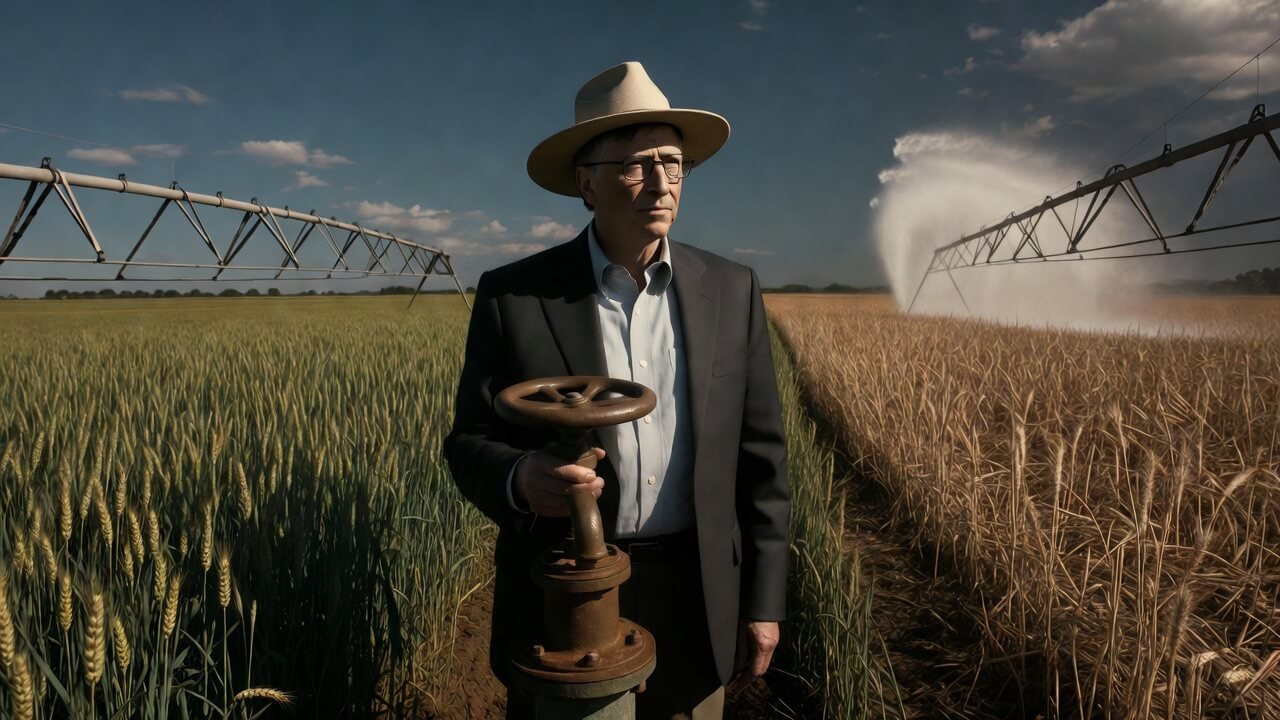
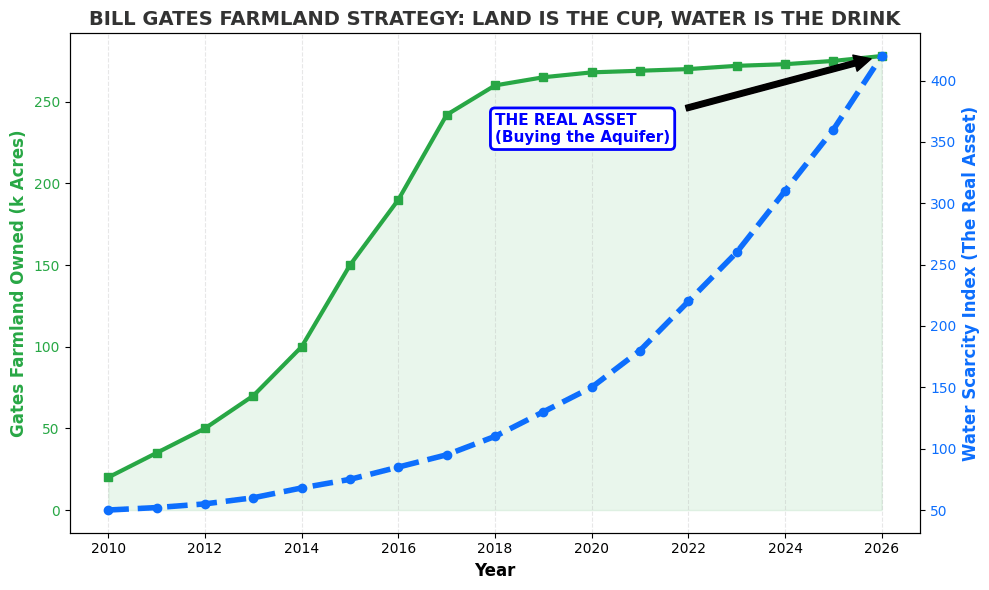
- The Bill Gates Farmland Grab: He is now the largest private farmland owner in the US (270,000 acres). But he’s not becoming a farmer; he’s becoming a landlord of resources.
- The Water Monopoly: In the US West, “He who owns the land, owns the water.” Gates is buying land atop giant aquifers. He is hedging against the coming water crisis.
- The Synthetic Agenda: Squeeze traditional cattle farmers with high costs, then sell the solution: Synthetic Beef (which he invests in). It’s a classic “Problem-Reaction-Solution” strategy.
The Bill Gates Farmland accumulation is one of the most under-reported stories in finance. When the founder of Microsoft starts buying dirt instead of microchips, you have to ask: “What does he know that we don’t?”
The mainstream narrative is that he wants to “save the planet” with sustainable agriculture. But a closer look at the map reveals a different story. His farms are not just growing potatoes for McDonald’s; they are sitting on top of America’s most critical water sources. In this investigation, we expose why the Bill Gates Farmland strategy is actually a bet on the scarcity of water and the future of food control.
The Bill Gates Farmland Strategy: It’s About the Water
To understand the Bill Gates Farmland play, you must understand Western US water law. In many states, water rights are tied to land ownership. If you own the surface, you own the drill rights to the aquifer below.
The Ogallala Aquifer Connection
Look at where Gates is buying: Nebraska, Arizona, Arkansas. These areas sit atop the **Ogallala Aquifer**, one of the world’s largest underground freshwater sources. This aquifer is draining fast. As climate change dries up the Colorado River, groundwater will become more valuable than oil.
By securing 270,000 acres of land, Gates isn’t just securing soil; he is securing the faucet. In a future where California dries up, he will hold the monopoly on the most essential resource for life. He is positioning himself as the “Water Baron” of the 21st century.
The Synthetic Meat Agenda: Squeezing the Ranchers
The Bill Gates Farmland strategy works hand-in-hand with his investments in biotech food. Gates has famously stated that rich nations should move to “100% synthetic beef.”
The “Squeeze” Business Model
How do you make people eat fake meat? You make real meat too expensive.
- Control the Inputs: By buying up massive amounts of farmland and water rights, the cost of grazing and growing feed for cattle rises.
- Squeeze the Small Guy: Traditional family ranchers cannot compete with the rising costs of water and land rent. They go out of business.
- Offer the “Solution”: With real meat prices skyrocketing due to “resource scarcity,” Gates offers his patented solutions: Beyond Meat, Impossible Foods, and Upside Foods.
It is a vertical integration of the food supply chain. He owns the problem (land scarcity) and he owns the solution (lab-grown food).
The Detective’s Verdict: Follow the Billionaire
We cannot stop the Bill Gates Farmland expansion. But as investors, we can recognize the trend and profit from it. The era of cheap food and free water is over.
📊 The “Feudal Lord” Portfolio
| Asset Class | Top Picks | The Logic |
|---|---|---|
| Farmland REITs | $LAND (Gladstone) | If Gates is buying land, you should too. $LAND pays you monthly dividends from farm rents. |
| Ag-Tech & AI | $DE (John Deere) | Gates’ massive farms run on automation. Deere is the monopoly in autonomous tractors. |
| Water Infrastructure | $PHO / $XYL | Invest in the companies that treat, transport, and secure water. |
LAND IS THE NEW TECH
Bill Gates isn’t dumb. He sold his tech stocks to buy hard assets. The Bill Gates Farmland portfolio tells us that the next 20 years will be about survival: Food and Water.
Don’t just watch him become the landlord of America. Buy your piece of the farm now.