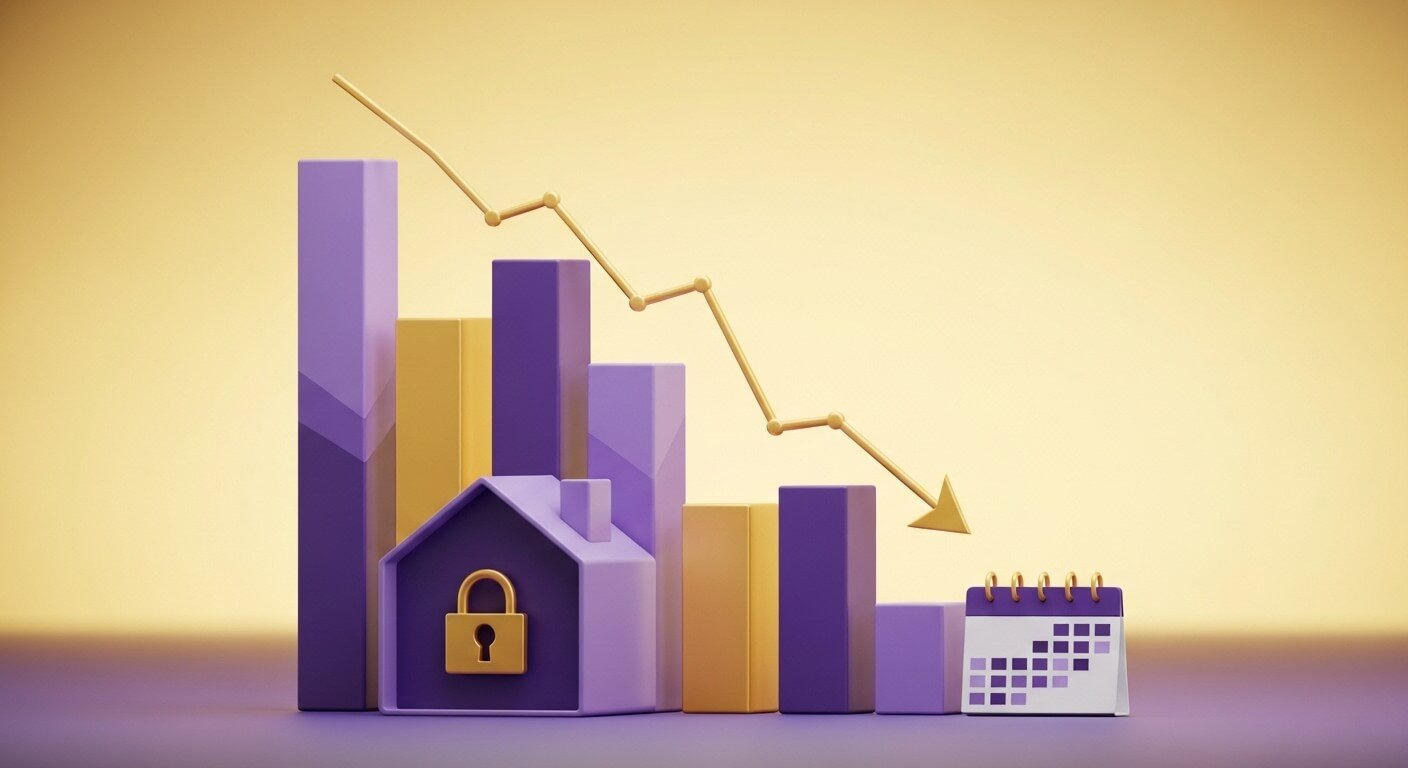
It seems like just yesterday we were all watching mortgage rates skyrocket. I remember looking at my own mortgage and thinking, “There’s no way these rates can keep going up, right?” It was a really stressful time for anyone looking to buy a home or even thinking about refinancing. But suddenly, something has shifted, and a lot of us are starting to feel a little more hopeful. Lower rates could mean a real chance to finally save some money or make that homeownership dream a reality. 😊
Understanding the Recent Mortgage Rate Plunge 🤔
The past few weeks have been a whirlwind, with US mortgage rates taking a sharp dive. But why is this happening? It’s mainly due to a combination of factors in the broader economy. Think about it: when there’s a lot of uncertainty, investors often move their money into safer assets like government bonds. As demand for these bonds goes up, their yields go down, and since mortgage rates tend to track those yields, they follow suit.
Mortgage rates are heavily influenced by the yield on the 10-year Treasury note, not directly by the Federal Reserve’s federal funds rate. A decrease in Treasury yields often signals falling mortgage rates.
Is Refinancing the Right Move for You? 📊
So, you’re seeing these lower rates and wondering if you should jump on the opportunity. It’s not a simple ‘yes’ or ‘no’ answer. The key is to run the numbers to see if refinancing will actually save you money in the long run. The general rule of thumb is that it’s worth considering if you can get a new rate that is at least 0.75% to 1% lower than your current rate. But honestly, even a smaller drop can make a difference depending on your loan size and how long you plan to stay in the home.
The Refinance Break-Even Point
This is probably the most important concept to understand. The break-even point is the time it takes for your savings from the lower interest rate to equal the cost of refinancing. Here’s a quick table to show you the key components:
| Term | Description | Average Cost |
|---|---|---|
| Closing Costs | Fees paid to finalize the new loan. | 2% to 5% of the loan amount |
| Monthly Savings | The difference between your old and new monthly payments. | Varies |
| Break-Even Point | Closing Costs ÷ Monthly Savings | Varies, typically 2-5 years |
Don’t forget to factor in closing costs! They can be a significant expense, and if you plan on moving before you reach your break-even point, refinancing might not be the best financial decision for you.
Simple Refinance Calculator 🧮
Let’s put the concept of the break-even point into practice. You can use this simple tool to get a rough idea of your potential savings. Just enter your current loan details and a potential new rate to see your estimated break-even point!
Refinance Savings Estimator 🔢
Navigating the Refinancing Process 👩💼👨💻
The journey to refinancing can feel a little intimidating, but it’s really just a series of logical steps. My advice? Start by getting your documents organized. Lenders will want to see proof of income, assets, and your credit history. The more prepared you are, the smoother the process will be. Remember to compare multiple lenders—rates and fees can vary significantly. Don’t be afraid to negotiate for better terms!
Aim to get quotes from at least three different lenders. This helps you compare not just the interest rate, but also the closing costs and other fees. A slightly higher rate with lower fees might be better for you in the long run.
Putting It All Together: A Real-World Example 📚
Let’s walk through a real-life scenario to make this all a bit more tangible. Imagine Jane, who bought her home a year ago when rates were much higher. She’s now seeing these new, lower rates and is wondering if she should refinance.
Jane’s Situation
- Original Loan: $350,000 at 7.25% interest rate
- Current Monthly Payment: $2,385
Refinancing Opportunity
1) A new lender offers a loan at 5.75%.
2) Estimated closing costs are $6,500.
The Calculation
– New Monthly Payment at 5.75%: approximately $2,042
– Monthly Savings: $2,385 – $2,042 = $343
– Break-Even Point: $6,500 ÷ $343 = ~19 months
In this case, Jane would recoup her closing costs in just over a year and a half. Since she plans to stay in her home for the long haul, refinancing is a fantastic financial move for her. It’s about finding that sweet spot where the savings outweigh the costs.
Summary: The Refinance Checklist 📝
To wrap things up, here’s a quick checklist to help you decide if it’s time to refinance:
- Lower Interest Rate: Your new rate should be significantly lower than your current one, preferably by at least 0.75% to 1% to justify the costs.
- Long-Term Plans: You should plan to stay in your home long enough to reach and pass your break-even point.
- Financial Health: Your credit score should be in good standing, and your debt-to-income ratio should be healthy.
- Market Conditions: The current market conditions should favor refinancing, like the recent plunge in rates.
Refinancing isn’t a silver bullet, but with a strategic approach and a little bit of number crunching, it can be a powerful tool to save you tens of thousands of dollars over the life of your loan. If you’ve been on the fence, now might just be the perfect time to explore your options. 😊