

The impending release of Grand Theft Auto 6 (GTA 6) in 2026 marks a historic milestone in entertainment history. However, beneath the satire of American corporate greed lies a sophisticated financial machine designed to extract maximum value from consumers. This report provides a factual analysis of GTA 6 Microtransaction Inflation, the mechanics of Recurrent Consumer Spending (RCS), and why the digital economy of the game is engineered to function as a “Capitalist Simulator” that mirrors the very systems it mocks.
The Financial Mechanics of GTA 6 Microtransaction Inflation
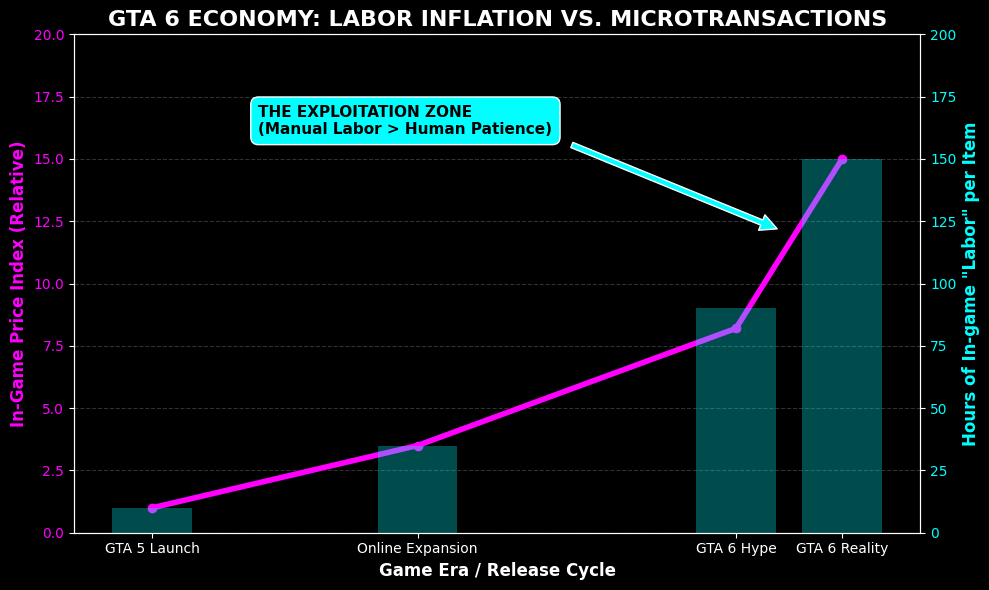
In 2026, the cost of high-end entertainment is no longer a one-time transaction. GTA 6 employs a strategy of structural inflation within its online ecosystem to drive microtransactions. By exponentially increasing the in-game cost of essential items (vehicles, real estate, and equipment) while keeping in-game wages stagnant, the developer creates a psychological “grind fatigue.”
The Recurrent Consumer Spending (RCS) Matrix
Take-Two Interactive, the parent company of Rockstar Games, has openly prioritized “Recurrent Consumer Spending” as its primary growth driver. For CEO Strauss Zelnick, performance bonuses are factually tied to the success of these ongoing digital sales. This creates a structural incentive for the game design to favor friction making the game intentionally difficult or time-consuming to play without purchasing “Shark Cards” (instant in-game currency). In 2026, a $100 premium “Early Access” edition is just the beginning of a lifelong digital tax.
Analysis of the In-Game Casino Loophole
One of the most controversial elements of the GTA economy is the integration of in-game gambling. While many countries have strict gambling laws, GTA 6 utilizes a legal gray area that has significant financial implications for young users.
📊 Factual Breakdown of GTA’s Predatory Economy
| Mechanism | Corporate Justification | The Economic Reality |
|---|---|---|
| In-Game Casino | Interactive entertainment and social feature. | Since currency cannot be “cashed out,” it bypasses many gambling laws, yet it trains users in high-stakes betting habits using real money for chips. |
| Early Access Pricing | Rewarding “super-fans” with exclusive first-look access. | Uses TikTok spoiler FOMO (Fear of Missing Out) to force an extra $30-$40 premium over the base game price. |
| Shark Card Inflation | Convenience for players with limited time. | The “grind” is intentionally tuned to be less efficient than a minimum-wage job, making a $20 microtransaction seem like a “rational” financial choice. |
Step-by-Step Guide to Managing Digital Entertainment Budgets in 2026
For household financial stability, managing entertainment “subscriptions” and microtransactions is a vital milestone. Follow these steps to audit your GTA 6 spending:
- Calculate Hourly Wage vs. Grind Time: If an in-game car takes 100 hours of manual “grinding” to earn, and a $20 card buys it instantly, the game is valuing your time at $0.20/hour. If you find yourself tempted to pay, the game design has successfully manipulated your time perception.
- Disable “One-Click” Purchasing: Remove saved credit card details from your console or PC. Creating friction in the purchasing process is the most effective defense against impulse microtransactions.
- Set a Lifetime Spend Cap: Decide on a total budget for the game (e.g., $100 total over two years) and stick to it factually. Do not treat in-game currency as a utility bill.
- Avoid Spoiling Leverage: Do not pay the $100 “Early Access” premium just to avoid spoilers. In 2026, the “spoiler economy” is a coordinated marketing tactic to inflate day-one revenue.
Frequently Asked Questions About GTA 6 Microtransactions
Is it factually possible to enjoy GTA 6 without spending extra money?
Technically, yes. However, the game is structurally designed to make the “free” experience increasingly tedious. As GTA 6 Microtransaction Inflation progresses, the gap between “paying players” and “grinding players” becomes a digital class system, often resulting in social exclusion within the game’s community.
Why are CEO bonuses tied to Recurrent Consumer Spending (RCS)?
RCS provides predictable, high-margin cash flow that Wall Street values more than one-time unit sales. By incentivizing the CEO to increase RCS, the board ensures the game remains a perpetual revenue machine rather than a one-off artistic product. This ensures the company’s stock remains resilient in 2026’s volatile market.
Verification Checklist Before Your GTA 6 Purchase
Before you commit your retirement savings or discretionary budget to GTA 6, personally verify the following factual items:
- [ ] Total Cost of Ownership: Calculate the base game price + projected microtransactions for one year. Is it over $200?
- [ ] Account Security: Ensure two-factor authentication (2FA) is active to prevent digital asset theft.
- [ ] Parental Controls: If purchasing for a minor, verify that “in-game spending” is factually disabled at the system level.
- [ ] Subscription Audit: Check if your “GTA+” subscription is still active and if you are actually utilizing the monthly benefits.
Next Steps for Your Digital Asset Management
Securing your financial future requires a critical eye toward “digital leakage”—small, recurring costs that drain your net monthly income. Once you have audited your digital entertainment budget, you should have a clearer picture of your 2026 discretionary spending. It is highly recommended to review the official Take-Two (TTWO) investor relations reports to understand the future direction of their monetization strategies. Protecting your wealth means recognizing when you are playing a game, and when the game is playing you.