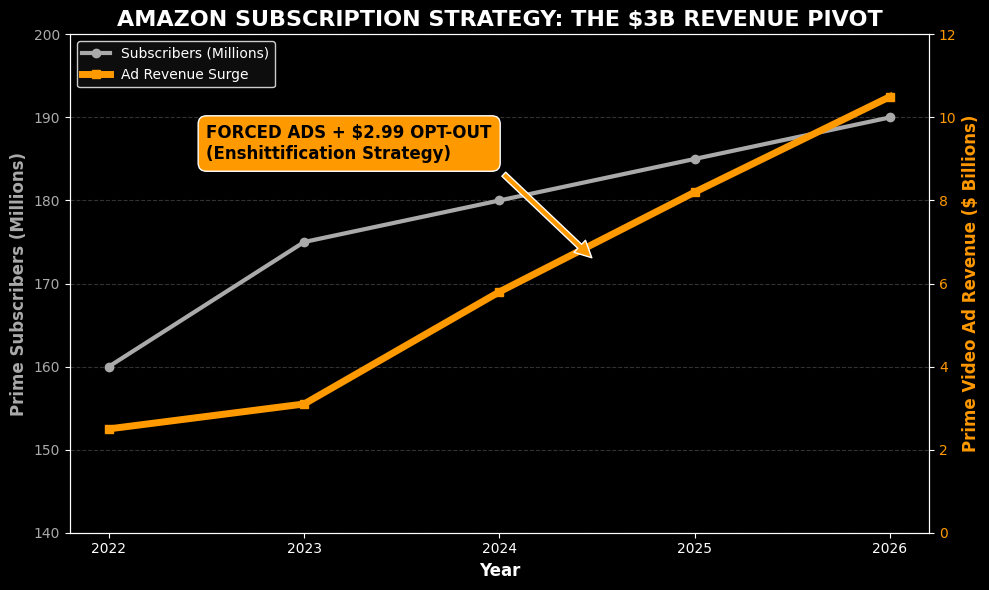
The Amazon Prime Subscription Strategy has undergone a significant structural shift in 2026. By integrating forced advertisements into previously ad-free tiers and offering a paid opt-out for $2.99 per month, Amazon has created a massive new revenue stream estimated at $3 billion annually. This guide factually analyzes the financial mechanics of this “Enshittification” model and the psychological “Sunk Cost” traps that keep the Prime ecosystem robust despite rising consumer costs.
The Economics of the Amazon Prime Subscription Strategy in 2026
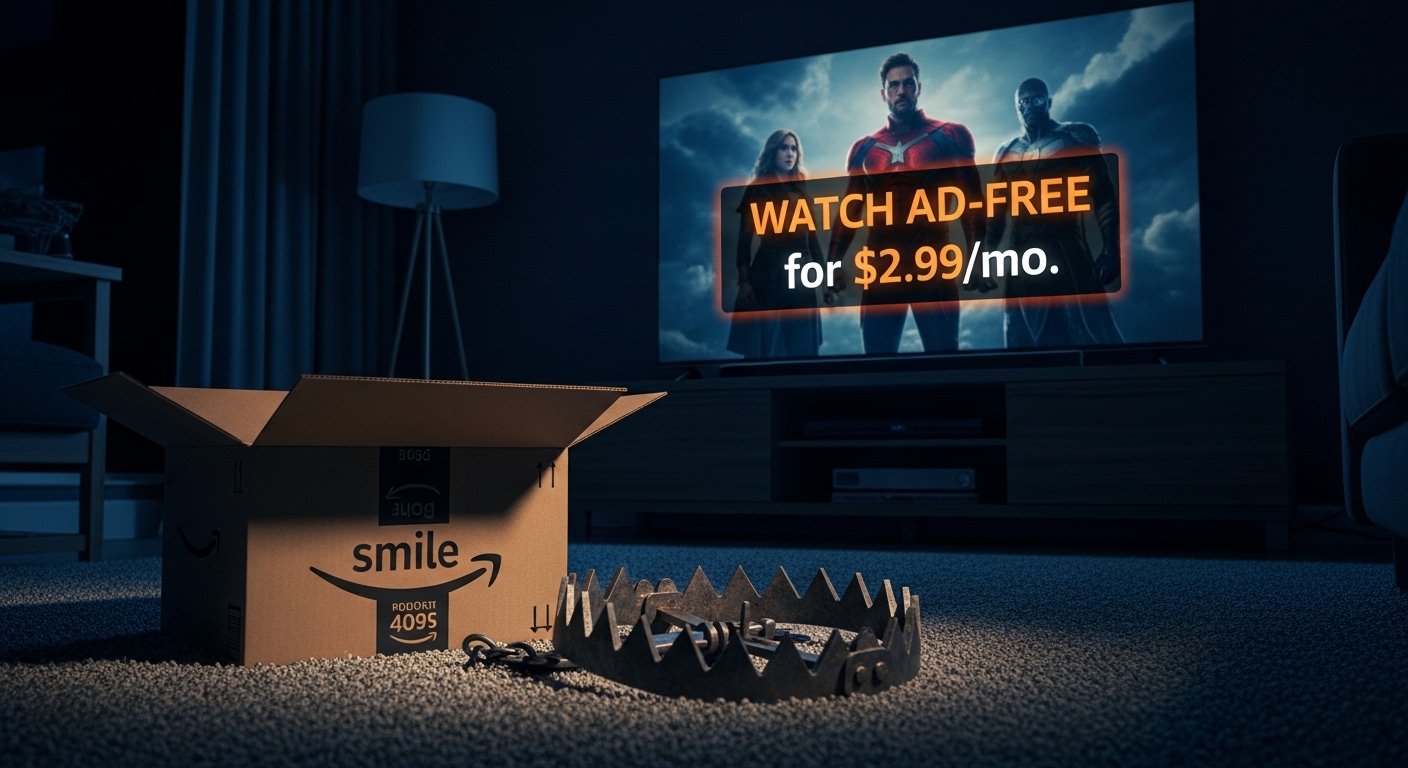
The transition to a hybrid ad-supported model represents a fundamental change in how digital giants monetize their user base. Amazon Prime Video, the home of the high-traffic series The Boys, now serves ads by default to its 180 million+ global subscribers. To regain an ad-free experience, members must pay an additional $2.99 monthly surcharge.
The Monetization of Existing Traffic
Unlike acquiring new customers, this strategy monetizes existing traffic with near-zero additional infrastructure cost. Financial analysts categorize this as “High-Margin Incremental Revenue.” By utilizing the popularity of its flagship content to funnel users toward the higher-priced tier, Amazon has successfully decoupled its subscription price from the actual value of the content, effectively taxing user attention.
Identifying the Sunk Cost Trap in Prime Ecosystems
A primary pillar of the Amazon Prime Subscription Strategy is the creation of a “walled garden” that makes cancellation psychologically difficult for the average household. This is achieved through the Sunk Cost Fallacy, where users feel they must continue paying to justify the benefits they already use.
📊 Factual Breakdown of Prime Bundle Lock-in
| Service Layer | Consumer Benefit | The Economic Lock-in |
|---|---|---|
| Logistics | Unlimited Free Shipping | Users calculate “saved shipping costs” to justify the annual fee, even if they buy more than needed. |
| Groceries | Whole Foods Discounts | Integrates Prime into the weekly grocery budget, making the subscription feel like a “living expense.” |
| Entertainment | Prime Video & Twitch | Exclusive content like The Boys acts as a recurring hook to prevent seasonal churn. |
Step-by-Step Guide to Managing Your Amazon Subscription Costs
Managing digital subscriptions is essential for maintaining a healthy retirement budget in 2026. Follow these steps to audit your Prime value:
- Review Annual Shipping Savings: Log into your Amazon account and check your order history for the past 12 months. Factually calculate if the “free shipping” savings actually exceed the $139 (or higher) annual fee.
- Audit Overlapping Services: If you pay for the $2.99 ad-free Prime Video upgrade but also subscribe to Netflix or Max, determine if you are actually utilizing all platforms enough to justify the cumulative cost.
- Analyze Twitch/Music Benefits: Many Prime users do not utilize the Twitch Prime or Amazon Music benefits. If these are unused, the “bundle value” is factually lower for your household.
- Evaluate Monthly vs. Annual: If you only watch specific shows like The Boys, consider a monthly subscription for two months rather than a full annual commitment.
Frequently Asked Questions about Amazon Prime Changes
Why did Amazon introduce ads to a paid subscription?
The primary driver is the maturation of the subscription market. Since new user acquisition has slowed, Amazon must extract more revenue per existing user. Advertising provides high-margin income that supplements the flat subscription fee, allowing for continued investment in high-budget content and logistics infrastructure.
Is the $2.99 ad-free upgrade factually worth it?
This depends on your “Time-to-Cost” ratio. If you watch more than 10 hours of Prime Video a month, the $2.99 fee prevents approximately 60 minutes of advertisements. If you value your time at more than $3/hour, the upgrade may be factually efficient for your household.
Checklist for Evaluating Your Digital Subscription Value
Before you renew your annual Prime membership, personally verify the following items to avoid the “Prime Prison” trap:
[ ] Actual Shipping Usage: Did you order at least 25 times this year? (The break-even point for shipping).
[ ] Whole Foods Savings: Verify your actual grocery savings in the Whole Foods app under the “Prime Member Deals” section.
[ ] Ad-Free Necessity: Determine if the advertisements on Prime Video actually disrupt your viewing experience enough to warrant the $36 annual increase.
[ ] Alternative Sourcing: Check if items you buy on Amazon are factually cheaper on the manufacturer’s direct website or at local competitors.
Next Steps for Your Amazon Prime Subscription
Proactive management of your digital expenses is a vital financial milestone. Once you have completed your audit, you should receive a clearer picture of your household’s net benefit from the Amazon Prime Subscription Strategy. It is highly recommended to review your 2026 bank statements for any recurring “junk fees” and consult the official Amazon.com “Manage Membership” portal to adjust your settings accordingly to protect your net monthly income.