🛢️ Detective’s Briefing: The Pump Paradox
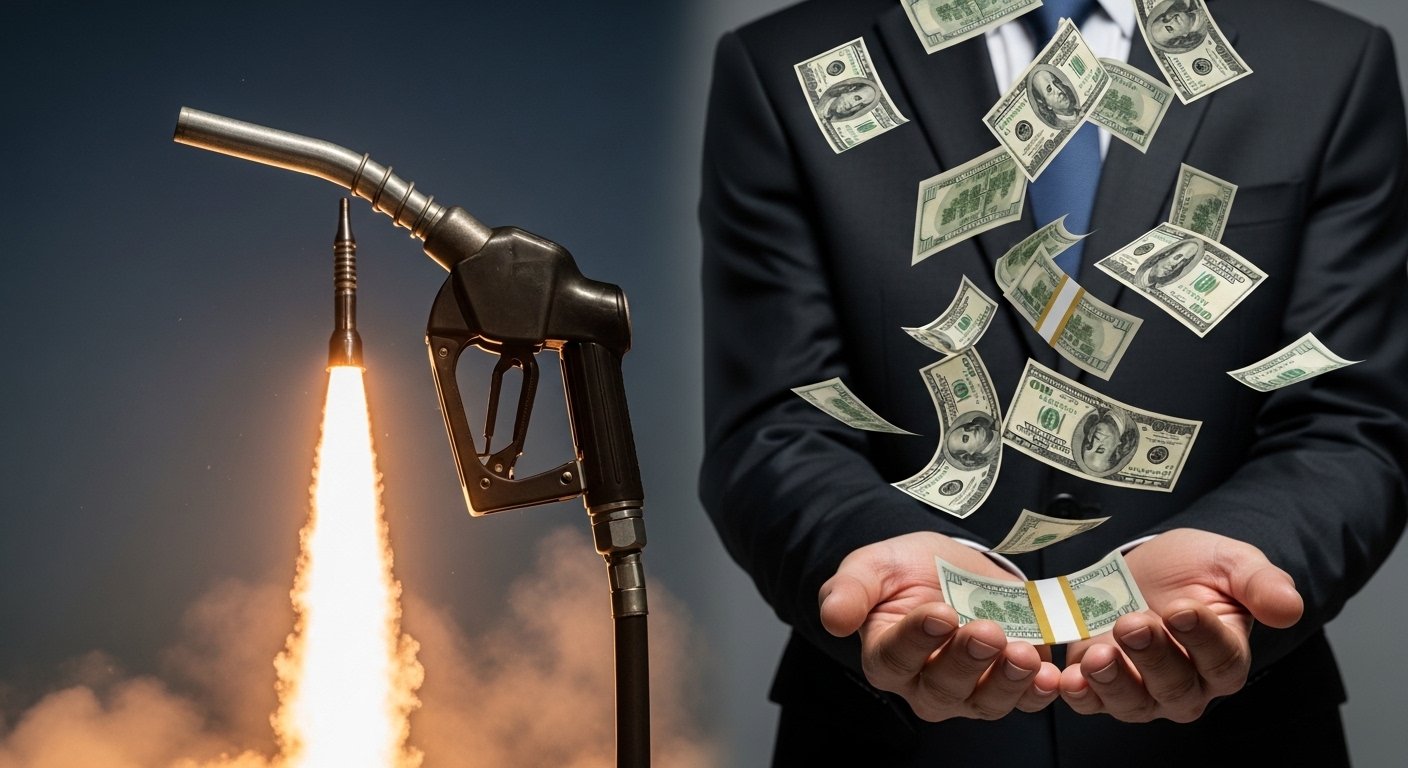
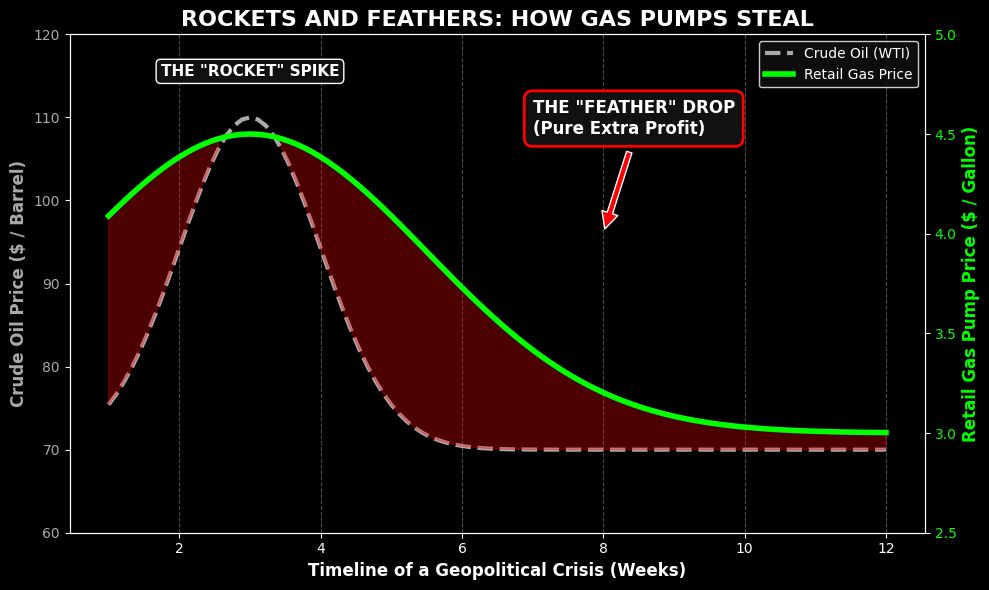
- The Asymmetric Market: The **Rockets and Feathers Oil** effect describes how retail gas prices shoot up like a rocket during a crisis, but float down like a feather when the crisis ends. This lag is purely engineered for profit.
- The “Crack Spread” Secret: The real money isn’t just in crude oil. It is the margin made by turning crude into gasoline. During wars, refineries claim “supply fear” to artificially triple this margin.
- The Psychological Shield: Constant media coverage of geopolitical tensions conditions consumers to accept high prices, neutralizing public backlash while oil executives cash in.
You wake up and see breaking news: Geopolitical tensions have escalated. Missiles are flying.
You drive to work, and the gas station sign has already jumped 40 cents a gallon. The owner claims they must adjust to the global crude oil market immediately.
But two weeks later, the panic subsides. The global price of crude oil crashes back to normal. Yet, as you drive home, the gas station sign hasn’t budged. It drops by just a penny a week.
This infuriating phenomenon is not a glitch in capitalism. It is a highly studied, deliberate economic strategy known as the Rockets and Feathers Oil pricing effect. In this file, we expose how the energy sector weaponizes global panic to drain your wallet.
The “Rockets and Feathers Oil” Phenomenon
Why do prices go up instantly, but come down slowly? The industry will tell you it takes time for cheaper oil to “flow through the supply chain.”
That is a lie. If it takes weeks for cheap oil to reach the pump, why does expensive oil reach the pump the very next morning?
The Real Reason: Local Monopoly Power
Gas stations raise prices like a “Rocket” because they base it on replacement cost. They know the next truck of gas will be expensive, so they hike the price of the gas currently sitting in their underground tanks to protect their margins.
However, when crude drops, they drop prices like a “Feather.” Why? Because you still need gas to get to work. Unless the gas station across the street aggressively lowers their price, there is no incentive to cut prices. They keep the difference as pure, unadulterated profit for as long as consumers tolerate it.
The Hidden Multiplier: The Crack Spread
Most news anchors only talk about the price of a barrel of WTI (West Texas Intermediate) crude oil. But you don’t put crude oil in your car. You put gasoline in your car.
The Rockets and Feathers Oil scam is executed by the middlemen: The Refineries. The difference between the cost of crude oil and the price of the refined gasoline is called the “Crack Spread.”
Profiting from the Panic
When a war breaks out, refiners instantly widen the crack spread. They tell the public, “We are worried about supply chain disruptions.” A normal crack spread might be $15 a barrel. During a geopolitical shock, refiners will push it to $45 or $50 a barrel.
Even if crude oil prices stay flat, the refining companies make record-breaking profits by artificially widening the gap between the raw material and the finished product.
The Psychological Matrix & FTC Probes
How do they get away with this without riots in the streets?
They use the media. When the news broadcasts endless footage of global conflicts, it acts as a psychological anesthetic for the consumer. You are conditioned to think, “Well, there is a war going on, of course gas is $4.50.”
The US Federal Trade Commission (FTC) has investigated this repeatedly. During past energy crises, investigations found that major oil companies strategically tightened inventories and engaged in tacit collusion to keep pump prices high long after the crude market had stabilized. The panic is the cover they need to execute the **Rockets and Feathers Oil** strategy.
The Detective’s Verdict: Buy the Refinery
You cannot fight the pump. The Rockets and Feathers Oil effect is a structural reality of the energy market.
But as an investor, you can position yourself on the winning side of the transaction. Stop looking only at Exxon ($XOM) or Chevron ($CVX). Look at the pure-play refiners who control the “Crack Spread.”
📊 Investment Analysis: The Crack Spread Kings
| Ticker | Company | The Logic |
|---|---|---|
| $VLO | Valero Energy | One of the world’s largest independent refiners. When geopolitical panic widens the crack spread, Valero prints cash. |
| $MPC | Marathon Petroleum | They own massive refining capacity and their own retail stations (Speedway). They capture the markup at every stage. |
DON’T BE THE FEATHER
Geopolitical conflicts are tragedies, but in the financial world, they are business opportunities engineered by middlemen.
Every time you pay inflated prices at the pump while crude is dropping, remember: you are funding a refinery’s dividend. You might as well own the stock and get your money back.