You swipe right.
You swipe left.
You get a match, chat for a bit, and then… ghosted.
You delete the app in frustration.
But a week later, you download a different app, hoping for better luck.
Here is the brutal truth:
You didn’t switch companies. You just walked into a different room of the same casino.
This is the story of the Match Group Monopoly and the secret algorithm designed to keep you single.
💘 Detective’s Briefing: The Love Trap
- The Illusion of Choice: Tinder, Hinge, OkCupid, Plenty of Fish, and Match.com. They look different, but they are all owned by one giant: Match Group ($MTCH).
- The Secret Score: Tinder ranks you with an “ELO Score.” If you are “attractive,” you see other attractive people. If not, you are invisible.
- The Business Model: If they find you a partner, they lose a customer. Their goal is “Retention,” not “Marriage.” That’s why they introduced a $500/month VIP tier.
In this file, we expose how the “Luxottica of Love” monetizes your loneliness.
The Illusion of Choice: One Ring to Rule Them All
You think you are choosing an app that fits your personality.
- “Tinder is for hookups.”
- “Hinge is for relationships.”
- “OkCupid is for serious people.”
Wrong. They are all brands in the Match Group Monopoly portfolio. Just like Luxottica owns Ray-Ban and Oakley, Match Group owns almost every major dating app in the Western world (over 40 brands).
When you leave Tinder for Hinge, Match Group doesn’t lose a user; they just move your data from their left pocket to their right pocket.
The Algorithm: The ELO Score & The Slot Machine
How does the app decide who you see? It’s not fate. It’s the ELO Score.
The Ranking System
Just like a video game, you are ranked. The algorithm tracks who swipes right on you. If “high-ranking” users like you, your score goes up. If they reject you, it goes down.
Variable Reward (The Dopamine Hook)
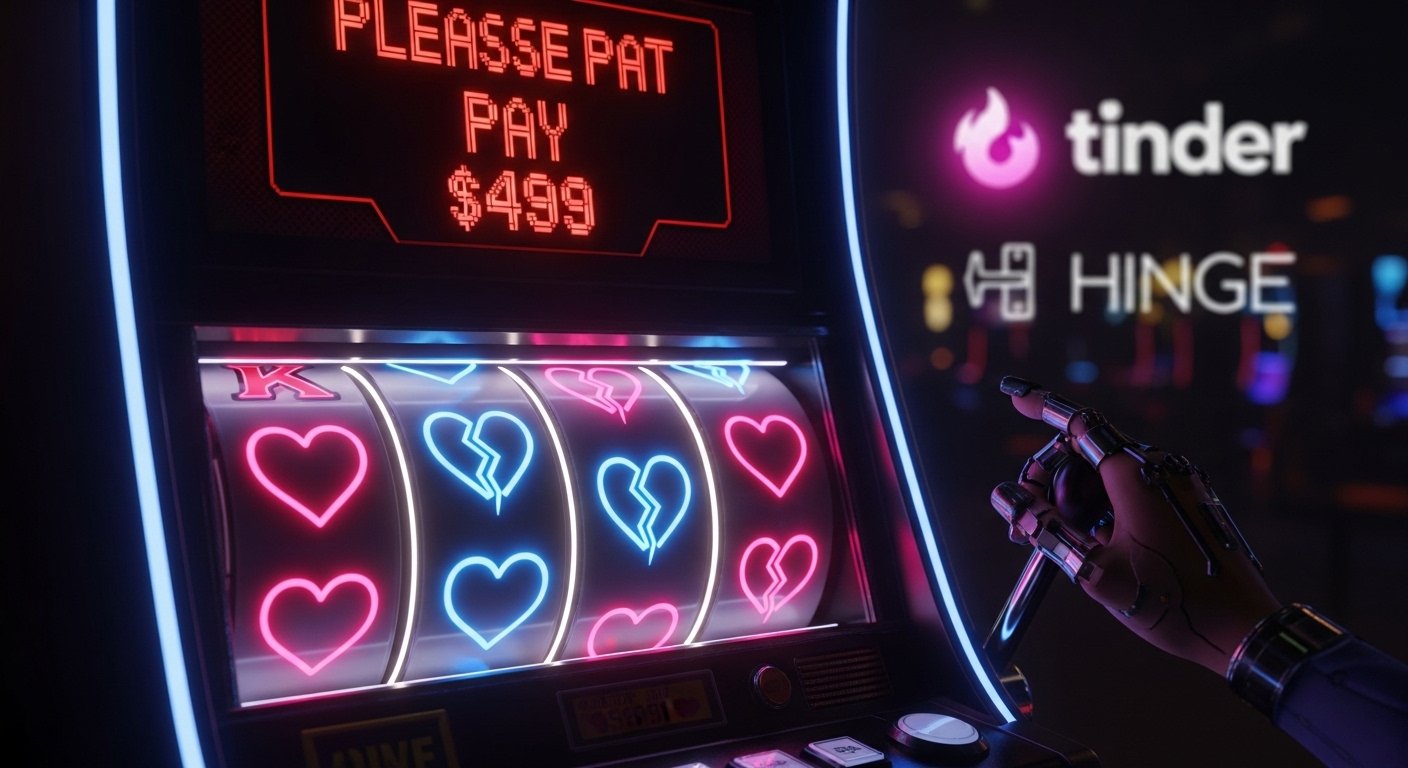
The app uses a psychological trick called “Variable Reward Schedule” the same logic used in slot machines.
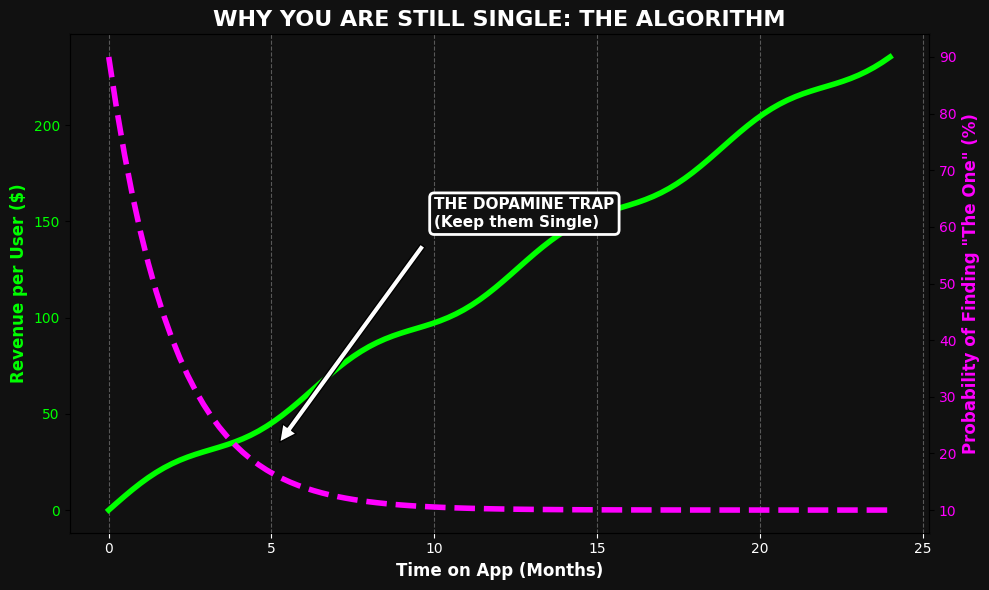
They could show you your perfect match immediately. But they don’t. instead, they show you mostly incompatible people, with just enough “great profiles” sprinkled in to keep you swiping. They need you to stay addicted to the hope of the next swipe.
The Cost of Loneliness: The Age Tax & The $500 Club
The monopoly is getting aggressive with pricing.
The “Age Tax” Scandal
Tinder was caught charging users over 30 years old nearly double the price for the same features as younger users. They settled a lawsuit for $24 million. Their calculation was cold: “Older people are more desperate, so they will pay more.”
Tinder Select ($499/Month)
Recently, they launched “Tinder Select,” a VIP membership costing $499 per month (approx. $6,000/year). It allows you to message people who haven’t even matched with you. It proves that loneliness is a highly lucrative business model.
The Detective’s Verdict: A Dying Monopoly?
The Match Group Monopoly (MTCH) has a powerful moat, but cracks are forming.
📊 Investment Analysis: MTCH
| Pros (Bull Case) | Cons (Bear Case) | Verdict |
|---|---|---|
| Dominance: They own the market. Huge cash flow from subscriptions. | Gen Z Fatigue: Young users are tired of “gamified dating” and are quitting apps. | Hold / Watch. The monopoly is strong, but user growth is stalling. |
LOVE IS A CASINO
The app is designed to be deleted… eventually. But not before they extract maximum value from you.
Don’t hate the player, hate the algorithm.