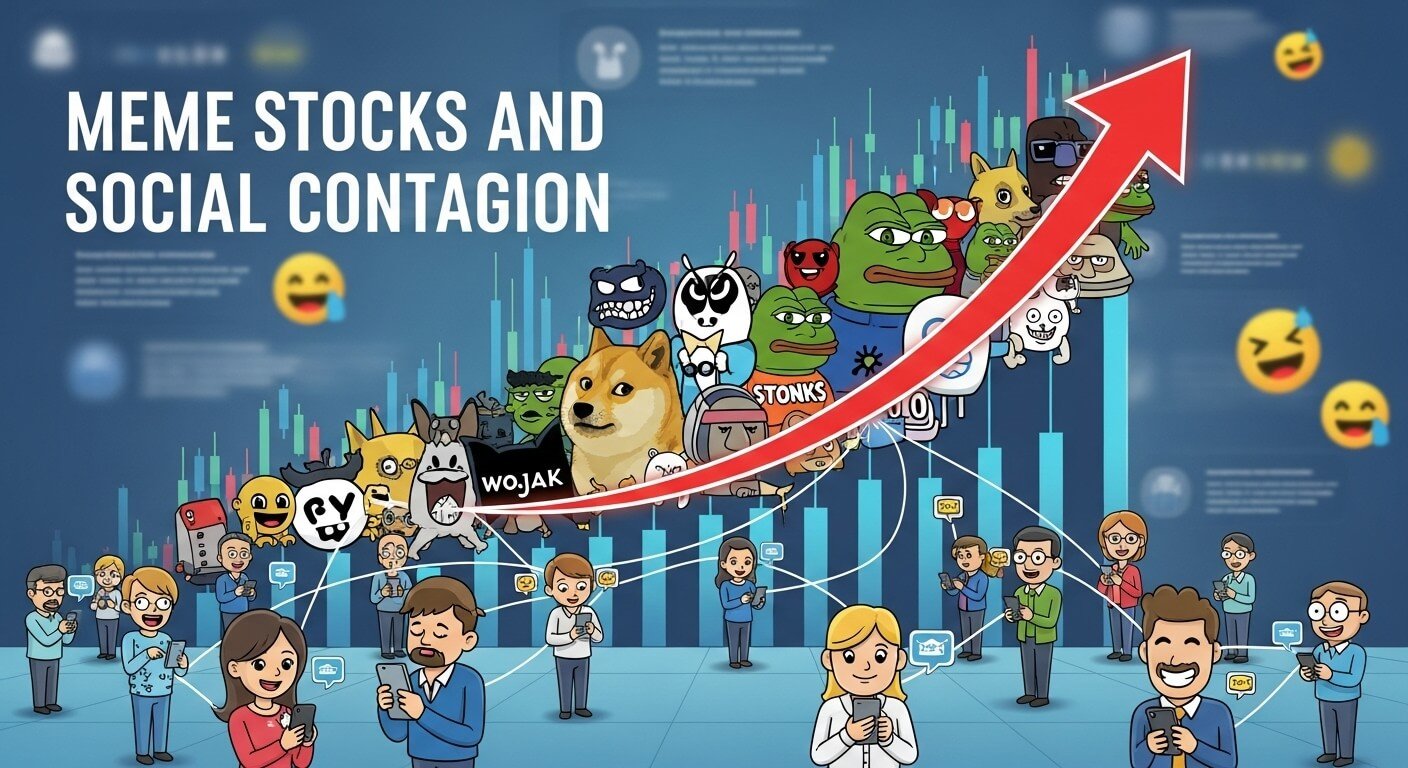
Struggling with Investment FOMO? You’re not alone. If you remember early 2021, you likely saw the rocket emojis 🚀 next to tickers like GME and AMC and felt a powerful pull to buy in. That fear of being the only one not getting rich is a classic example of Fear of Missing Out, one of the most potent psychological forces in modern investing. Let’s explore why it’s so hard to resist. 😊
The Psychology Behind the Frenzy 🤔
The GameStop saga wasn’t just a financial event; it was a psychological phenomenon. From a behavioral finance perspective, it was a perfect storm of cognitive biases. We saw the Bandwagon Effect in full force. This is our tendency to do something primarily because many other people are doing it. When you see thousands of posts on Reddit’s WallStreetBets, all cheering for the same stock, your brain interprets that as a social cue: “This must be the right move.”
Then there’s the concept of Obedience to Authority. In this new era, “authority” isn’t a stuffy analyst on Wall Street. It’s a charismatic influencer on YouTube or TikTok with a massive following. When a “fin-fluencer” confidently predicts a stock will “go to the moon,” their social proof acts as a powerful persuasion tool. We subconsciously defer to their perceived expertise, even if it’s not backed by sound financial analysis.
Behavioral finance teaches us that investors are not always rational. Emotions and social factors can lead us to make decisions that contradict traditional financial models. Understanding these biases is the first step to overcoming them.
Survival Guide for the Fin-fluencer Age 📊
So, how do we navigate this new landscape where financial advice is everywhere, but wisdom is rare? It’s not about avoiding social media altogether. It’s about building a psychological toolkit to protect yourself. The goal is to make decisions based on your own principles, not the internet’s hype.
Key Principles for Modern Investors
| Principle | Actionable Step | Why It Works |
|---|---|---|
| 1. Know the Business | Before investing, be able to explain what the company actually does to make money. | Grounds your investment in reality, not just hype. |
| 2. Vet the Source | Ask: Is this influencer showing their track record? Are they explaining their reasoning or just making predictions? | Separates entertainers from educators. |
| 3. Set an Exit Strategy | Decide your selling price (for profit or to cut losses) *before* you buy. | Prevents greed or fear from dictating your trades. |
FOMO is an emotion, not an investment thesis. The feeling that you *must* act now is a major red flag. True investment opportunities don’t require you to abandon all critical thinking. If it feels like a panic, it’s probably a trap.
Key Points 📝
The meme stock phenomenon taught us a valuable lesson: the biggest risk in investing isn’t always a bad company, but our own psychology. The pressure to conform, the allure of quick riches, and the fear of being left behind are powerful forces. But by understanding them, we can build a defense.
Taming Investment FOMO
Question ❓
Ultimately, becoming a better investor means becoming more self-aware. What have you learned from your own experience with FOMO? Share your thoughts in the comments below! 😊