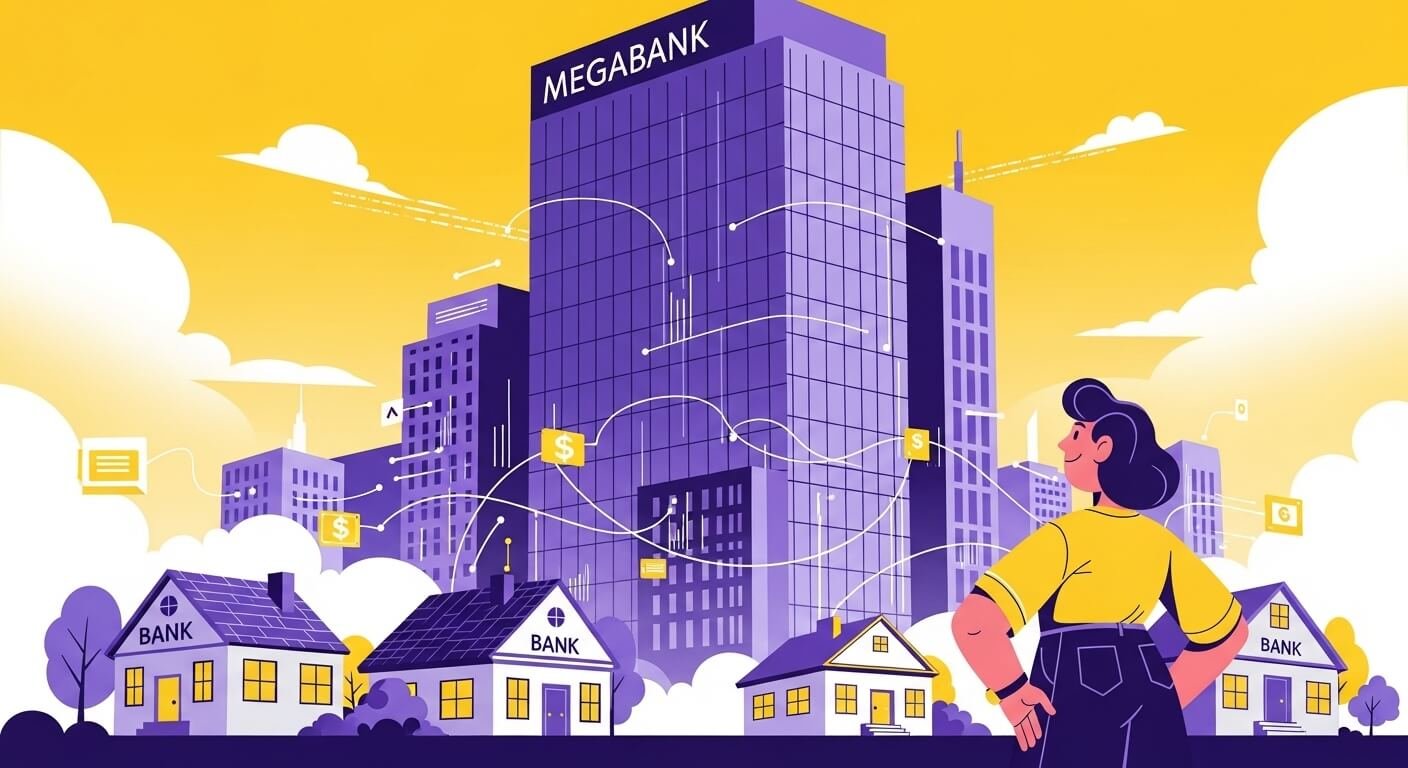
Have you ever felt like your local bank is just a small fish in a huge ocean? It’s a pretty common feeling these days. I mean, it seems like every time you turn on the news, another big bank is getting bigger. The financial landscape is changing so fast, and honestly, it can feel a little intimidating. I remember my grandfather always talking about his small community bank, where everyone knew his name. Now, it seems like we’re all just account numbers in these massive financial institutions. But what does that actually mean for us? Let’s dive into the world of megabanks and see what’s really going on behind the scenes. 😊
What is a Megabank, Anyway? 🤔
A megabank is essentially a financial institution that has grown so large and holds so much influence that it’s considered to be a key player in the global financial system. Think of banks with assets in the trillions of dollars, a huge international presence, and millions of customers. Their sheer size and complexity mean they often operate under different rules and have a significant impact on the economy as a whole. While some people might feel a bit lost in such a large system, their size also brings some unique benefits and drawbacks that are worth exploring.
The Pros and Cons for Consumers 📊
When we look at megabanks from a consumer perspective, there are definitely two sides to the coin. On one hand, their massive scale allows them to offer a range of services and conveniences that smaller banks just can’t match. On the other hand, that same scale can lead to some significant downsides. It’s a classic case of convenience versus personalization, and sometimes it’s hard to decide which is more important.
Megabank Benefits for You
- Wider Range of Services: Megabanks are like a one-stop-shop for all your financial needs. From checking and savings accounts to mortgages, investment management, and private banking, they have it all. This can be super convenient if you like keeping all your financial products in one place.
- Advanced Technology: Let’s be honest, megabanks generally have the resources to invest in the latest tech. That means great mobile apps, instant transfers, and sophisticated security systems. This makes managing your money a breeze, no matter where you are.
- Global Reach: If you travel a lot or do international business, a megabank’s global network of ATMs and branches can be a huge plus. It makes international banking a lot easier and often cheaper.
The Potential Downsides
- Less Personalized Service: In a system with millions of customers, it’s easy to feel like you’re just a number. It can be hard to reach a specific person for help, and you might miss the kind of personal connection you’d find at a community bank.
- Higher Fees: While not always the case, megabanks sometimes charge higher fees for things like overdrafts or ATM withdrawals. This can add up quickly if you’re not careful.
- Systemic Risk: This is a big one. Because of their size, if a megabank fails, it can cause a ripple effect that destabilizes the entire financial system. This is a primary concern for regulators and a major reason for new rules.
Remember, the bigger the bank, the more complex its fee structure can be. Always read the fine print and know what you’re paying for.
New Regulations: What’s Changing? 👩💼👨💻
This brings us to the core of the issue: new banking regulations. Regulators are well aware of the risks posed by megabanks. New rules, often stemming from events like the 2008 financial crisis, are designed to make the financial system more stable and protect consumers. It’s a constant balancing act between fostering growth and ensuring stability.
- Capital Requirements: Regulators are making sure megabanks have enough money, or “capital,” to absorb unexpected losses. The idea is that they can handle financial shocks without needing a government bailout.
- Stress Testing: This is basically a worst-case-scenario drill. Megabanks have to prove they can survive a severe economic downturn. This helps regulators identify weaknesses and prevent a potential crisis before it starts.
- Resolution Plans: These are often called “living wills.” Megabanks are required to have a clear, credible plan for how they would be wound down in an orderly way if they were to fail, without causing chaos in the market.
While these regulations might seem complex, their main goal is simple: to prevent another major financial crisis and protect the savings of millions of people like you and me.
Practical Steps for Consumers 🧮
With all this in mind, what can you, the consumer, do? It’s all about being proactive and informed. Don’t just pick a bank because it’s the biggest one. Take the time to understand your options and choose what’s right for your needs.
Financial Health Checklist 📝
- Compare Fees: Look at the fee schedule for checking accounts, savings accounts, and credit cards. Some banks offer free accounts or waive fees if you meet certain requirements.
- Evaluate Services: Think about what you really need. Do you need a physical branch, or are you happy with a robust mobile app? Does the bank offer the type of loans or investment accounts you might need in the future?
- Consider Customer Service: How easy is it to get in touch with a human? Read online reviews about their customer support. This can save you a lot of headaches down the line.
- Check FDIC/NCUA Insurance: Make sure your bank is insured by the FDIC (or NCUA for credit unions). This protects your deposits up to $250,000 per depositor, per institution, in case of a bank failure.
Case Study: A Small Business Owner 📚
Let’s look at a real-world example. Imagine Jane, a small business owner. For years, she banked with a local credit union. The service was personal, and she felt connected to her community. But as her business grew, she needed more complex services like international wire transfers and a more sophisticated payroll system.
Jane’s Decision Process
Step 1: Needs Assessment. Jane listed all the new services her business required. She also considered her personal finances, including a plan to buy a new home and start an investment portfolio.
Step 2: Comparison. She researched three top megabanks and compared their business banking packages, mobile app features, and customer service reviews. She also checked the fees for international transfers, which were a crucial part of her business. Jane realized that while a megabank might lack the “community feel,” its technology and integrated services would save her significant time and money in the long run.
The Outcome. Jane chose a megabank that offered a great business banking platform, and she set up a separate personal account for her daily transactions. This dual approach gave her the best of both worlds: the advanced tools she needed for her business and the convenience she wanted for her personal life.
Jane’s story shows that it’s not about whether a bank is “big” or “small.” It’s about finding the one that perfectly aligns with your current and future financial needs. Don’t be afraid to mix and match if it makes sense for you!
The Bottom Line 📝
Navigating the world of finance can be tough, especially with the continuous evolution of banking. But by understanding what megabanks are and how new regulations are designed to protect you, you can make smarter decisions about your money. The future of banking isn’t about one-size-fits-all solutions; it’s about finding the right tools for your unique journey.
I hope this post helped clear things up a bit. Remember, knowledge is power when it comes to your finances. If you have any questions or want to share your own experiences with megabanks, please leave a comment below! I’d love to hear your thoughts. 😊
Megabanks & You: Key Takeaways